
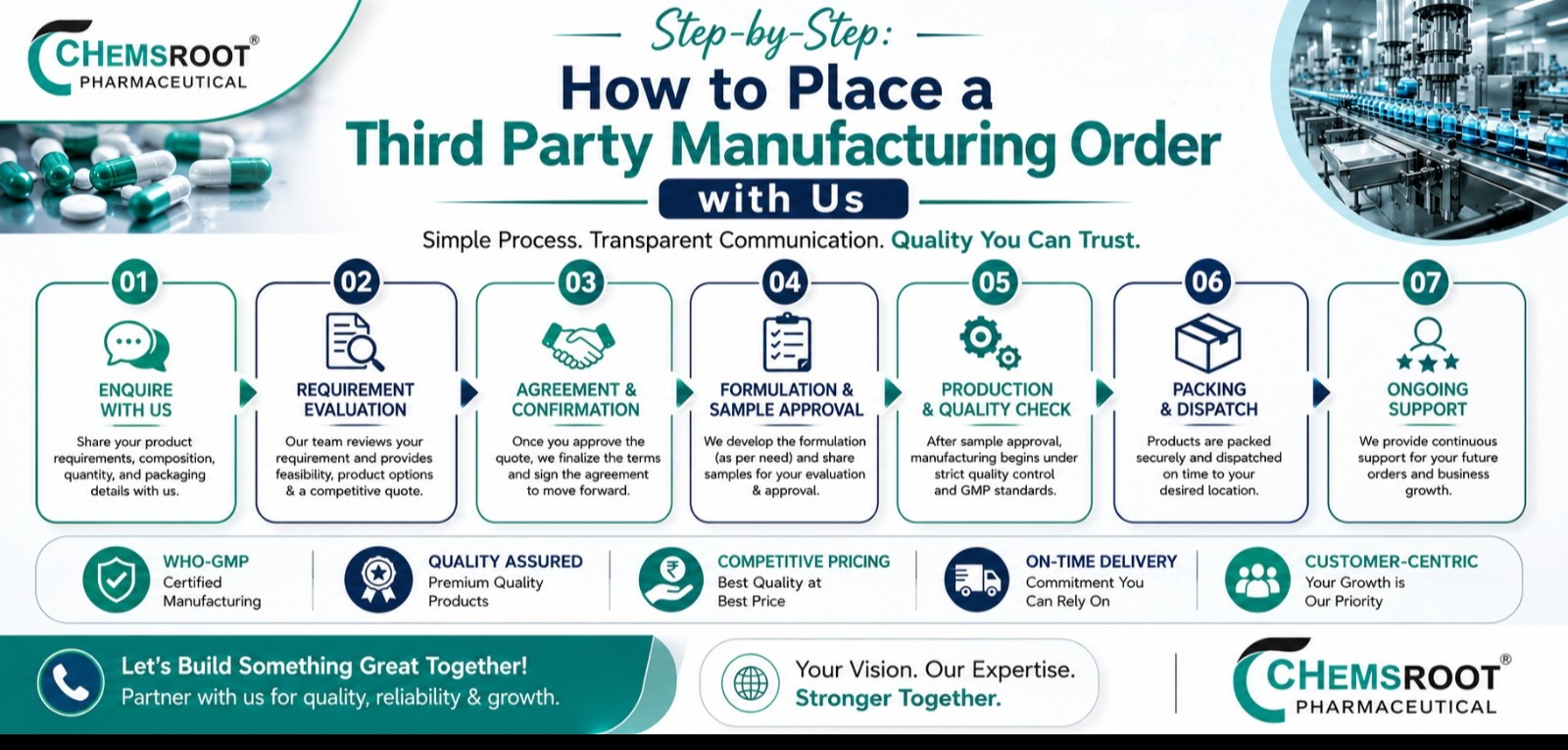
Starting a pharmaceutical brand no longer requires owning a manufacturing facility. Third-party pharmaceutical manufacturing has made it possible for distributors, healthcare entrepreneurs, hospitals, pharmacy chains, and pharmaceutical marketers to launch products under their own brand while experienced manufacturers handle production.
Understanding the manufacturing process before placing an order helps avoid delays, documentation issues, and unnecessary revisions. Whether you are introducing a new product line or expanding an existing portfolio, following a structured process ensures smoother execution.
Step 1: Finalize Your Product Requirements
Begin by identifying the products you want to manufacture.
Consider details such as:
- Product category
- Dosage form
- Strength
- Packaging style
- Quantity required
- Brand name
- Target market
Many businesses start with a limited product range before gradually expanding their portfolio.
Step 2: Share Your Product List
Once your requirements are finalized, provide the manufacturer with the list of products you intend to launch.
Typical product categories include:
- Tablets
- Capsules
- Syrups
- Dry syrups
- Injections
- Ointments
- Creams
- Lotions
- Protein supplements
- Nutraceuticals
Providing complete specifications helps the manufacturer prepare an accurate quotation.
Step 3: Review Product Availability
The manufacturer verifies whether the requested formulations are available for third-party manufacturing.
At this stage, discussions generally cover:
- Minimum order quantity
- Packaging options
- Manufacturing timelines
- Product specifications
- Label requirements
Some businesses also request customized packaging or unique branding elements.
Step 4: Approve the Quotation
After evaluating the product requirements, a commercial quotation is prepared.
The quotation generally includes:
- Product pricing
- Packaging details
- Lead time
- Payment terms
- Manufacturing conditions
Review every detail carefully before confirming the order.
Step 5: Submit Required Documents
Documentation is an important part of pharmaceutical manufacturing.
Depending on the products and business structure, documents may include:
- Drug license
- GST registration
- Company details
- Trademark documents, if applicable
- Purchase order
Providing complete documentation helps avoid production delays.
Step 6: Artwork and Packaging Approval
The next stage involves label and packaging design approval.
This may include:
- Product labels
- Cartons
- Foils
- Bottles
- Inserts
- Brand logo placement
Artwork approval should be completed before production begins to avoid revisions after manufacturing.
Step 7: Manufacturing Begins
After documentation, payment formalities, and artwork approval are completed, production starts.
Manufacturing usually includes:
- Raw material procurement
- Production
- In-process quality checks
- Laboratory testing
- Packaging
- Batch documentation
Quality control is performed throughout the manufacturing cycle to ensure product consistency.
Step 8: Quality Verification
Before dispatch, finished products undergo quality inspection.
Manufacturers typically verify:
- Product specifications
- Packaging accuracy
- Batch records
- Label compliance
- Product appearance
This helps ensure that every batch meets established manufacturing standards.
Step 9: Dispatch and Delivery
After successful quality checks, products are packed and dispatched according to the agreed schedule.
Reliable logistics planning helps businesses receive products safely and begin distribution without unnecessary delays.
Why Businesses Prefer a Structured Manufacturing Process
A systematic manufacturing workflow offers several advantages:
- Better production planning
- Transparent communication
- Reduced documentation errors
- Predictable delivery timelines
- Consistent product quality
- Easier portfolio expansion
These benefits are particularly valuable for growing pharmaceutical businesses serving multiple markets.
Manufacturing Support from Chandigarh
Chandigarh continues to be a preferred location for pharmaceutical outsourcing due to its connectivity and access to the pharmaceutical ecosystem of North India.
Chemsroot Pharmaceutical follows a structured third-party manufacturing process designed to simplify product development for clients across India. From formulation selection to packaging and dispatch, the company supports businesses through each stage of the manufacturing journey.
Planning Before You Place an Order
Before submitting your first manufacturing order, prepare a detailed product list, verify regulatory documents, finalize branding requirements, and estimate your projected demand. Careful planning helps reduce revisions, improves production efficiency, and enables a smoother product launch while creating a strong foundation for future expansion.