A supplier can quote bilastine 20 mg and montelukast 10 mg yet still lack approval, validated methods, stability evidence, or the safety controls required for this exact fixed-dose combination. You will be able to distinguish an appropriate clinical product from promotional positioning, verify the manufacturing dossier, and compare suppliers using documents that withstand regulatory and commercial review.
Key takeaways
- Confirm the indication and target market before commissioning the combination.
- Separate adult 20 mg/10 mg tablets from paediatric strengths and dosing needs.
- Demand batch test results, stability data, licences and manufacturing records.
- Protect your territory, artwork, recalls and quality obligations in the agreement.
Is Bilastine 20 mg Plus Montelukast 10 mg the Right Product to Manufacture?
The bilastine montelukast tablet indication must be defensible before you assess a supplier. Bilastine is an H1 antihistamine for allergic rhinitis and urticaria; montelukast is a leukotriene receptor antagonist used in selected asthma-related therapy and, with restrictions, allergic rhinitis.
Combining them can make sense when histamine-driven allergy and leukotriene-mediated symptoms both require treatment, but “broad respiratory allergy coverage” is a sales claim, not an approved indication.
OptionBest fitLimitationBilastine 20 mg plus montelukast 10 mgDocumented combined allergic and leukotriene-mediated needNot automatically first-line allergic rhinitis treatmentBilastine aloneAllergic rhinitis or urticaria controlled by an antihistamineDoes not provide montelukast’s leukotriene pathway effectMontelukast aloneSelected asthma-related therapy or restricted allergic-rhinitis usePoor choice when an antihistamine or stronger nasal treatment is neededIntranasal corticosteroidNasal congestion and broader allergic rhinitis controlDifferent device, technique, and adherence burdenAnother antihistamine regimenAlternative H1 symptom controlMay offer no added benefit over bilastine
Montelukast requires approved safety wording, prescribing judgment, and patient counselling because neuropsychiatric events include suicidal thoughts or actions; it is not automatically first-line for allergic rhinitis. Before manufacture, verify the exact strength, indication, dosage form, manufacturer, and market-specific fixed-dose combination approval or marketing authorization. Separate approvals for bilastine and montelukast do not approve the combination.
The proposed bilastine 20 mg montelukast 10 mg uses must match the authorized dossier, not merely a promotional label.
How Do You Separate the Adult Tablet from a Paediatric Product?
An adult bilastine montelukast tablet is not automatically suitable for a child, and a paediatric bilastine montelukast syrup is not an interchangeable replacement. They can differ in active strengths, excipients, dose-measuring requirements, palatability, stability profile, and regulatory labelling.
Use this procedure before approving paediatric distribution:
1. Do not split or crush the adult tablet, substitute the syrup, or calculate a child’s dose from the adult strength unless the approved product information and the prescriber specifically permit that action. The tablet’s 20 mg bilastine and 10 mg montelukast strengths do not establish a paediatric dose.
2. Confirm the bilastine administration instruction. Take the 20 mg dose one hour before or two hours after food or fruit juice because meals and grapefruit juice reduce bilastine exposure. A clear “bilastine empty stomach” instruction must appear where patients will see it; document the bilastine fruit juice interaction in the leaflet and carton.
3. Inspect the pack design, patient leaflet, and carton instructions for readable timing directions. Train distributors to repeat them instead of giving adult promotional copy to families.
4. Ask the manufacturer for the approved age range, dosing instructions, contraindications, interaction wording, and final artwork for each jurisdiction. Do not accept one adult label adapted informally for paediatric use.
Which Quality Tests Prove the Finished Tablet Is Consistent?
A credible batch certificate of analysis must show separate identity and assay results for bilastine and montelukast. One combined assay can pass while tablets contain unequal amounts of each ingredient, or while montelukast dissolves poorly despite acceptable bilastine release.
DocumentWhat to inspectWhy it mattersProduct specificationRelated substances, degradation products, uniformity of dosage units, dissolution for each active, disintegration, hardness, friability, moisture, and microbial quality where applicableDefines release limits for the finished tabletAnalytical packageValidated, stability-indicating methods for the actual tablet matrix; specificity, precision, accuracy, range, solution stability, and system-suitability dataShows the method detects each active and its degradation productsBatch certificate of analysisResults, units, limits, method references, batch number, test dates, and reviewer approvalConnects reported results to the supplied batch
Ask for content uniformity testing, not merely average tablet weight. Review tablet friability, hardness, disintegration, and moisture protection because excessive hardness can delay release, while weak tablets fail handling and high moisture can accelerate degradation.
Check whether each API uses an IP, Ph. Eur., USP, or other recognised monograph identity standard. Incoming containers need tamper checks, label verification, sampling, and authentication before release; trace each container to the finished batch.
Require API supplier qualification records, impurity and residual-solvent limits, retest or expiry dates, and manufacturing-site traceability. Finally, demand real-time and accelerated stability data for the marketed formulation in proposed packaging: applicable ICH Q1A(R2) conditions include 25°C/60% RH or 30°C/65% RH long-term and 40°C/75% RH accelerated testing. Accelerated data alone is insufficient.
What Documents Should You Demand Before Placing a Third-Party Manufacturing Order?
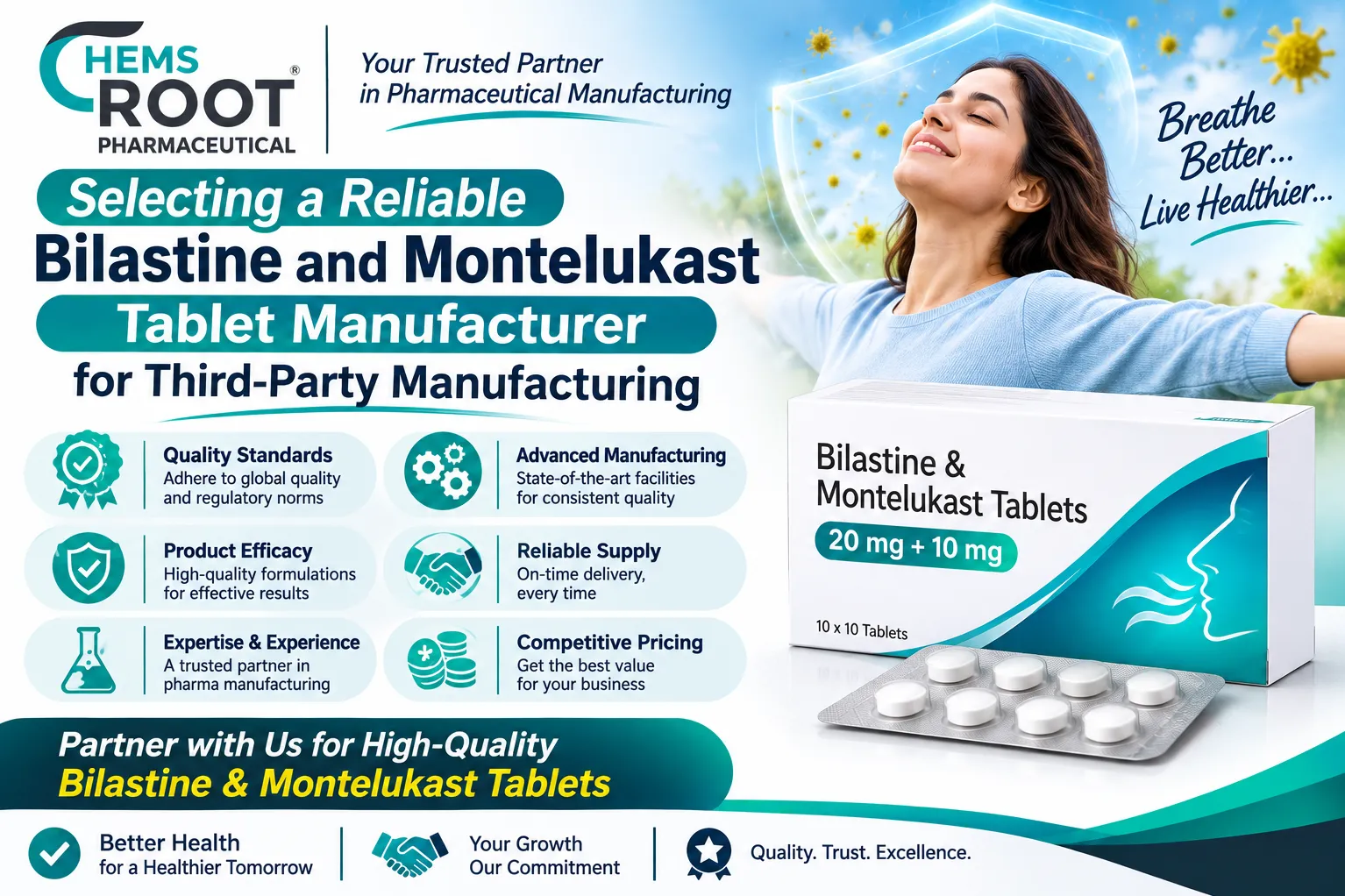
A catalogue proves that a supplier lists the product; it does not prove that the plant can make this exact combination. Before appointing a third-party bilastine montelukast manufacturer, request documents naming bilastine 20 mg plus montelukast 10 mg, not a related respiratory product.
1. Obtain the master formula and product specification, approved batch manufacturing record, in-force bilastine montelukast manufacturing licence, GMP inspection or compliance evidence, and product-specific permission or marketing authorization for this strength and dosage form.
2. For an Indian supplier, verify the licence with the relevant State Licensing Authority and check its premises, dosage-form, and product scope. Company registration, an ISO certificate, or a WHO-GMP logo cannot replace statutory drug-manufacturing authorization. Apply this test to Chemsroot Pharmaceutical or any other candidate instead of relying on a catalogue or sales presentation.
3. Request a recent batch-specific certificate of analysis pharmaceutical record showing separate bilastine and montelukast identity, assay, dissolution, impurities, and release results. Ask for validated, stability-indicating method summaries, reference-standard details, and traceability to the tested batch.
Audit the quality system, not just the paperwork. Review deviations and CAPA effectiveness, OOS investigations, change control, complaints, recall simulation, data integrity, calibration, cleaning validation, and laboratory reference standards. Repeatedly closed deviations with weak root-cause analysis deserve rejection.
Finally, match the commercial blister or bottle to stability evidence. Confirm protection against moisture, light, and oxygen, and verify that the proposed pack is the one used for shelf-life studies.
Related product
 General
₹190
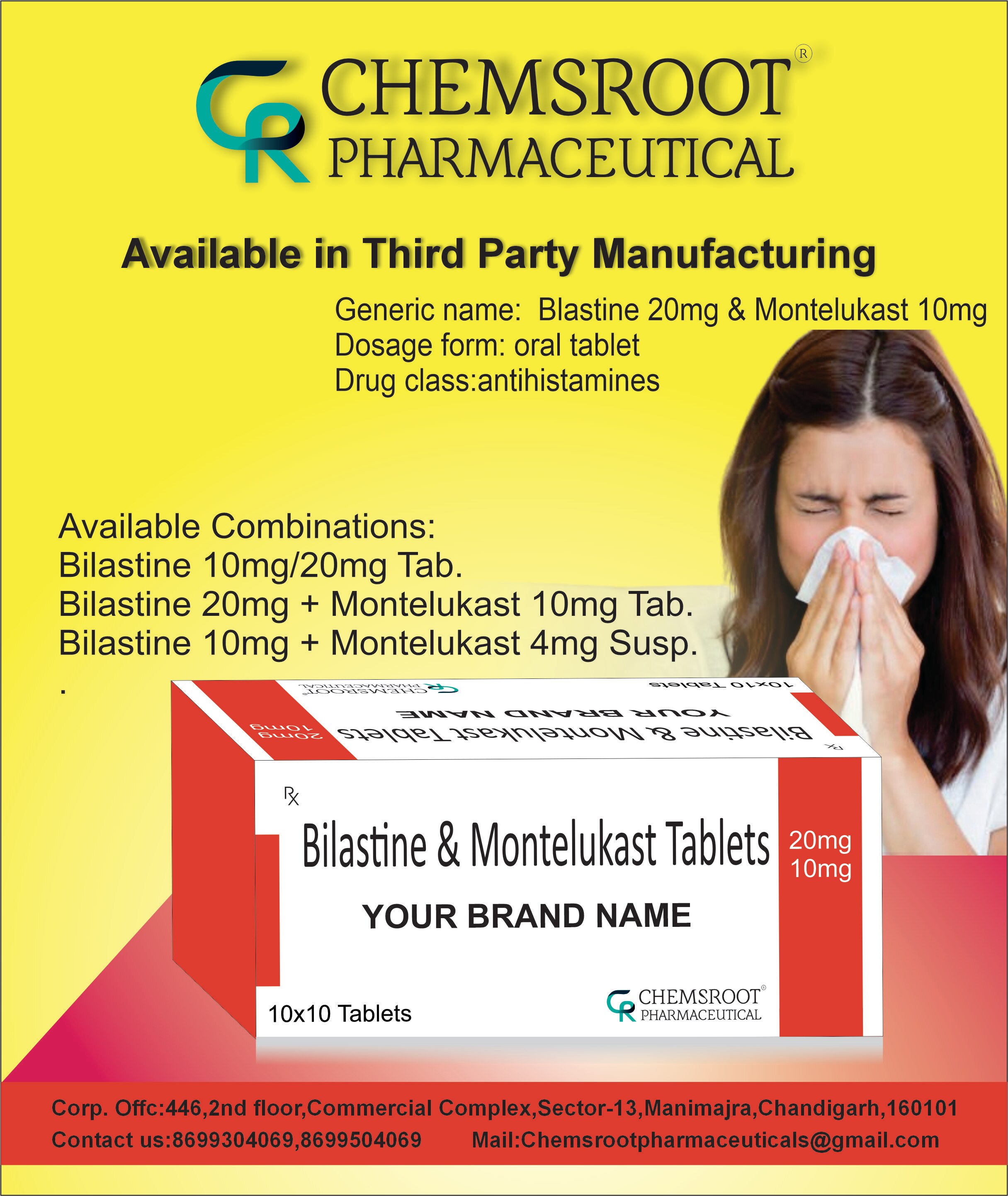
BIlastine 20mg + Montelukast 10mg Tab.
How Should the Supply Agreement Protect Your Product and Market?
Put every handoff in the pharmaceutical quality agreement and commercial contract. Assign the manufacturer batch release, deviation and OOS investigation, complaint investigation, recall execution, inspection support, and adverse-event intake; assign the buyer artwork approval, market authorization, approved safety wording, and final commercial release.
Define pharmacovigilance responsibilities manufacturer, reporting timelines, escalation contacts, and ownership of stability and analytical data.
ResponsibilityRequired agreement termEvidence to retainManufacturerBatch release, OOS results, deviations, complaints, recalls, inspections, rejected-goods destruction or returnSigned records, investigations, recall reportsBuyer and manufacturerArtwork approval, safety wording, adverse-event intake, pharmacovigilance reportingApproved artwork, reporting log, regulator correspondenceBoth partiesChange notification and data ownershipChange-control approval, stability and analytical files
Include a controlled process for revising montelukast neuropsychiatric warnings, including suicidal thoughts or actions, whenever the target regulator changes its language. Do not distribute old cartons while revised wording awaits approval.
For export pharmaceutical documentation, verify the supplier can prepare:
- Legalized manufacturing or GMP certificates
- Batch-specific COAs and certificates of origin
- Packing lists, stability justifications, approved artwork, and a Certificate of Pharmaceutical Product or equivalent
Treat an API change control, new excipient, tablet design, packaging material, or dissolution specification as a formal change that may require comparability evidence or a regulatory variation. Proceed only when clinical positioning, authorization, release testing, stability, safety communication, and responsibilities match the sale market.
Frequently asked questions
- Is bilastine 20 mg plus montelukast 10 mg the right product to manufacture?
- Choose the combination only after confirming a defensible indication, target patient group, prescriber demand and the regulatory position in your market. Bilastine treats allergic rhinitis and urticaria; montelukast has selected asthma-related uses and restrictions for allergic rhinitis.
- How do you separate the adult tablet from a paediatric product?
- Treat bilastine 20 mg plus montelukast 10 mg as an adult-strength product. Do not market it to children without checking the approved age, strength, dosage form and prescribing information for your jurisdiction.
- Which quality tests prove the finished tablet is consistent?
- Request assay and content-uniformity results for both active ingredients, dissolution profiles, disintegration, hardness, friability, identification, impurities, microbial limits and stability data. Match acceptance criteria to the approved specification and pharmacopoeial method.
- What documents should you demand before placing a third-party manufacturing order?
- Request the manufacturer’s applicable drug-manufacturing licence, product approval or permission, GMP evidence, master formula, specifications, certificates of analysis, stability reports, batch records, testing methods and release procedures.
- How should the supply agreement protect your product and market?
- Define the territory, exclusivity, minimum order, lead time, artwork ownership, change-control notice, batch rejection, recall costs, complaint handling, pharmacovigilance, confidentiality and liability before production begins.
Keywords