A four-organism capsule is not validated by reporting one combined probiotic count. You need strain-level identity, organism-specific potency tests, stability data in the proposed container, and storage instructions that remain credible across heat, humidity, oxygen, and distribution delays. By the end, you will have a practical checklist for judging the formulation, packaging, manufacturing controls, and contract partner.
Key takeaways
- Record the exact strain code and count basis for every organism.
- Use organism-specific identity, potency, contamination, and safety tests.
- Support expiry dates with real-time and accelerated stability data.
- Select moisture- and oxygen-barrier packaging after capsule compatibility testing.
Define the four organisms before setting a potency claim
A potency claim is indefensible until each organism has an identity, strain record, and count basis. Streptococcus faecalis is the legacy name for Enterococcus faecalis; cross-reference both names in the master formula, certificate of analysis, label, and export dossier, then record the exact strain code. “Lactic acid bacillus” alone is not an adequate identity.
1. Confirm species and strain identity with culture records and validated identification methods. Record whether each result represents CFU, spores, or viable cells, and retain supplier certificates linking the culture to its strain.
2. Classify the organisms before designing recovery. Clostridium butyricum and Bacillus mesentericus are spore-formers; Enterococcus faecalis and lactic acid bacilli are vegetative cells. Use anaerobic recovery for Clostridium butyricum and a validated method that separates viable Bacillus spores from non-spore-forming organisms.
3. Do not use total aerobic plate count as proof that all four organisms meet their claims. Heat, humidity, oxygen exposure, blending, encapsulation, and sampling can suppress Clostridium butyricum or vegetative cells while the more robust Bacillus count appears acceptable.
4. Assess Enterococcus faecalis for acquired antimicrobial-resistance determinants and virulence-associated traits, not just species identity.
5. Set release and label claims as organism-specific viable quantities that remain acceptable at the stated expiry date, not merely the higher quantity filled at manufacture. State storage conditions and the count basis. A Bacillus mesentericus capsule manufacturer should reject any lot lacking strain traceability and component-specific release data.
Set organism-specific assays and safety controls
A total aerobic plate count cannot prove that every declared organism is present at its claimed potency. Release and expiry testing must use validated, organism- or strain-discriminating methods that recover living organisms rather than relying on one blended count.
- Streptococcus faecalis (Enterococcus faecalis): use selective recovery with strain identification, then assess acquired antimicrobial-resistance determinants and virulence-associated traits.
- Clostridium butyricum: perform anaerobic recovery in oxygen-controlled containers, and validate sampling, blending, encapsulation, and plating steps against oxygen exposure.
- Bacillus mesentericus: enumerate viable spores after a validated treatment that separates spores from vegetative cells and non-spore-forming organisms.
- Lactic Acid Bacillus: use validated selective recovery and strain identification that excludes background lactic-acid bacteria.
Report each result as viable CFU, with the basis clearly stating whether the declared quantity represents CFU, spores, or cells. Molecular identification alone confirms DNA, not viability; pair it with culture recovery.
Set separate acceptance limits for each organism at manufacture and for viable count at expiry. A blend can pass its total CFU limit while Clostridium butyricum has fallen below claim and the more robust Bacillus component masks the loss.
Include capsule disintegration, appearance, fill-weight variation, water activity or moisture, and microbiological purity in the same stability review.
Control oxygen and humidity during processing, sampling, and storage. Retain strain records, raw count calculations, selective-media suitability, recovery controls, and contaminant investigations so an out-of-specification result can be traced to one organism rather than hidden inside the total.
Build a stability programme that supports the expiry date
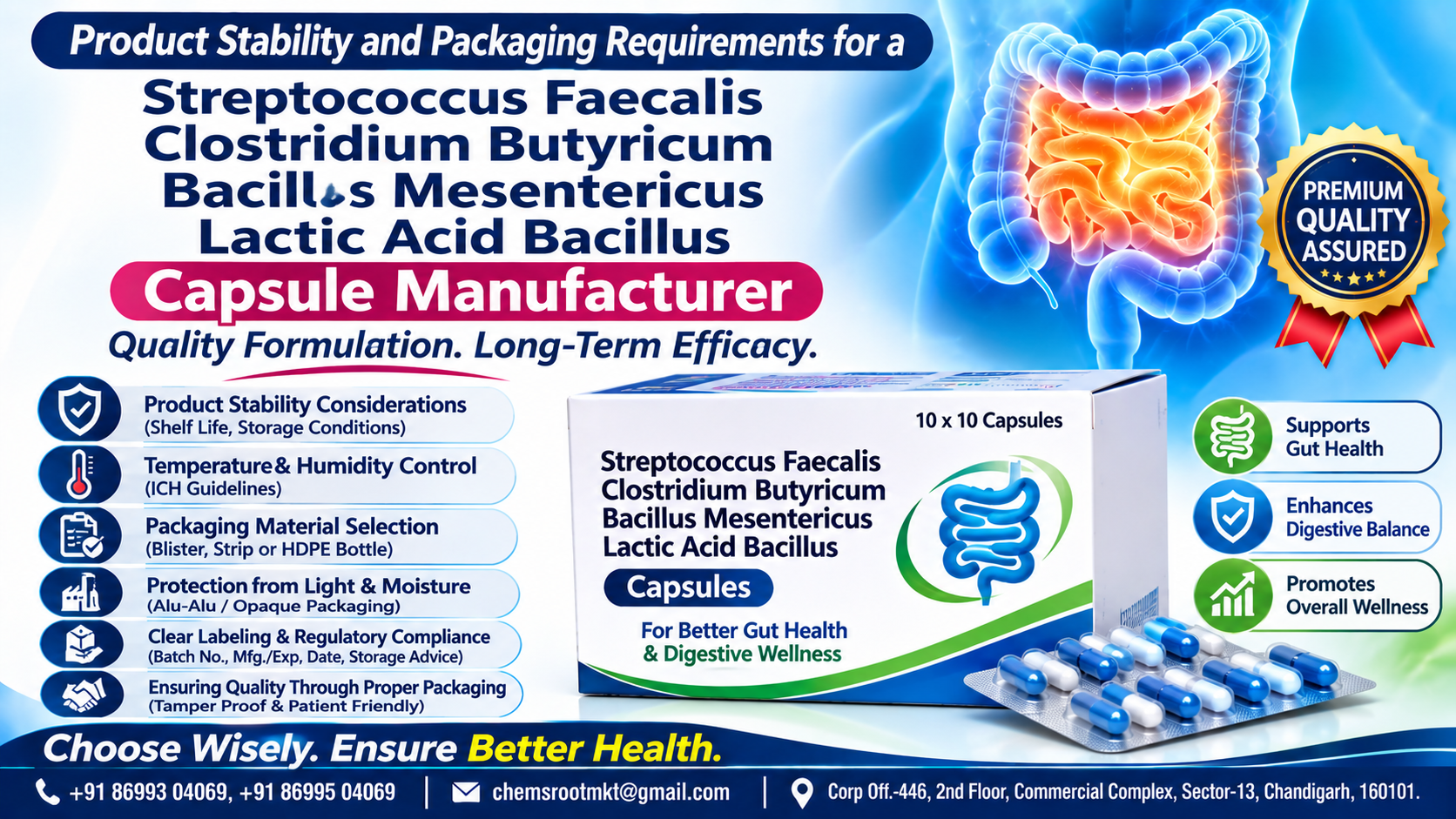
An expiry date is defensible only when real-time stability demonstrates that every declared organism remains viable through the proposed probiotic shelf life. Use the commercial container-closure system, not a laboratory vial; changing from an alu-alu blister to PVC or from a high-barrier bottle to ordinary HDPE changes moisture and oxygen exposure.
ConditionMinimum scheduleWhat it supportsLong-term25°C ± 2°C/60% RH ± 5% RH or 30°C ± 2°C/65% RH ± 5% RH, selected for the target market; test at 0, 3, 6, 9, 12, 18 and 24 monthsThe labelled expiry under ICH Q1A(R2)Accelerated40°C ± 2°C/75% RH ± 5% RH for 6 months, unless the product or market requires another justified condition; test at 0, 3 and 6 monthsHeat and humidity stress; not a substitute for real-time stabilityPhotostabilityDefined light exposure using the proposed pack when formulation, label claims or observations make light relevantEvidence for light protection
At each interval, assay Streptococcus faecalis, Clostridium butyricum, Bacillus mesentericus and Lactic Acid Bacillus separately, plus total viable count. Set the expiry limit for each organism at or above its declared end-of-shelf-life CFU; total CFU cannot hide one organism’s decline.
Also record water activity or moisture, appearance, fill weight, disintegration or dissolution, and microbiological purity. Reject a batch that exceeds validated moisture, capsule-performance or contamination limits. State the supported temperature range, humidity protection and excursion limits; “cool, dry place” is insufficient for hot, humid distribution.
Choose packaging for moisture, oxygen, light, and capsule compatibility
Choose the container-closure system by the product’s moisture and oxygen sensitivity, then use that same system in formal stability studies. Changing an aluminium-laminate blister to PVC, or replacing a high-barrier bottle with ordinary HDPE, can reduce viable counts and change capsule brittleness, disintegration, or appearance.
OptionProtection and limitationsWhen it appliesAluminium-foil blisterStrong moisture and light barrier; the forming side still needs compatibility testingUse for moisture-sensitive capsules when a compact unit dose is neededAlu-alu blisterAluminium on both sides gives the highest practical barrier to moisture, oxygen, and lightChoose for highly moisture-sensitive or oxygen-sensitive blends, including Clostridium butyricumHDPE bottleFlexible pack format, but barrier performance depends on resin, closure, seal, headspace, and opening cyclesUse only with validated moisture-barrier packaging and documented stability data
For a bottle, specify the desiccant type and capacity, induction seal, closure torque, and reclosure performance. A desiccant alone does not prove protection. Measure water activity or moisture, each organism’s viable count, capsule disintegration, fill-weight variation, and microbial purity during stability testing.
Control oxygen during blending, encapsulation, sampling, and headspace exchange; Clostridium butyricum can lose potency before a total-CFU result reveals the failure. Use organism-specific recovery testing. Protect the pack from light and run a defined photostability study when the formulation or label makes light exposure relevant.
Set storage temperature, humidity protection, and excursion limits from data, not “cool and dry.”
Qualify the manufacturing and distribution partner
Do not approve commercial supply from a catalogue, sample, or single certificate of analysis. Require a reviewable evidence package that links the formulation, container, storage statement, and expiry claim.
1. Request the product dossier and regulatory classification for each destination market. Confirm whether claims make it a food supplement, probiotic, or medicinal product, then verify the required licence, manufacturing standard, label, import documents, and pharmacopoeial tests.
2. Request the master formula, exact strain codes, culture-identification records, and batch CoAs. “Streptococcus faecalis” must cross-reference Enterococcus faecalis, and species-only names are inadequate. CoAs must show CFU, spores, or cells for each organism at release and at expiry.
3. Demand process-validation evidence for blending, encapsulation, sampling, and headspace control. Clostridium butyricum is anaerobic, so ask for oxygen limits and an organism-specific recovery method rather than relying on the Bacillus count. Compare hard gelatin versus HPMC using moisture, oxygen, and capsule-performance data.
4. Review real-time and accelerated stability reports using the proposed commercial pack, with potency, moisture, contamination, appearance, and disintegration results. Reject a change from alu-alu to PVC, or from a high-barrier bottle to ordinary HDPE, without bridging data.
5. Approve room-temperature distribution only with defined temperature and humidity excursions; approve refrigerated distribution only with cold-chain records and excursion studies. Chemsroot Pharmaceutical should be assessed against this same evidence standard, not its product catalogue.
Related product
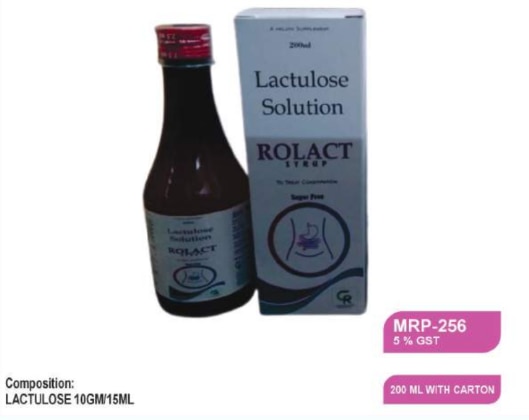 ROLACT
Chemsroot Pharmaceutical LLP presents ROLACT, a highly effective probiotic formulation designed to restore and maintain a healthy gut flora.
Frequently asked questions
- Why must the four organisms be identified before setting potency claims?
- Each organism needs a documented identity, strain code, count basis, and approved nomenclature. Record Streptococcus faecalis as the legacy name for Enterococcus faecalis, and do not use “lactic acid bacillus” as the sole identity.
- Which tests should a manufacturer set for a four-organism probiotic capsule?
- Set organism-specific identity and viable-count assays, then add tests for total aerobic microbial count, yeast and mould, specified pathogens, moisture, capsule integrity, and relevant toxin or antimicrobial-resistance risks.
- How can stability data support the capsule expiry date?
- Test finished capsules in their final packaging under real-time and accelerated conditions. Track each organism’s viable count, moisture, appearance, capsule performance, and microbiological safety at defined intervals through the proposed expiry.
- What packaging protects probiotic capsules during storage and distribution?
- Compare blister packs and HDPE bottles with desiccants using moisture-vapour and oxygen-barrier data. Check light protection, seal integrity, capsule-shell compatibility, temperature exposure, and the opened-pack handling period.
- How do you qualify a manufacturing and distribution partner?
- Review the manufacturing licence, GMP evidence, master formula, batch records, certificates of analysis, stability protocol, deviation history, transport controls, and temperature and humidity records before approval.
Keywords