
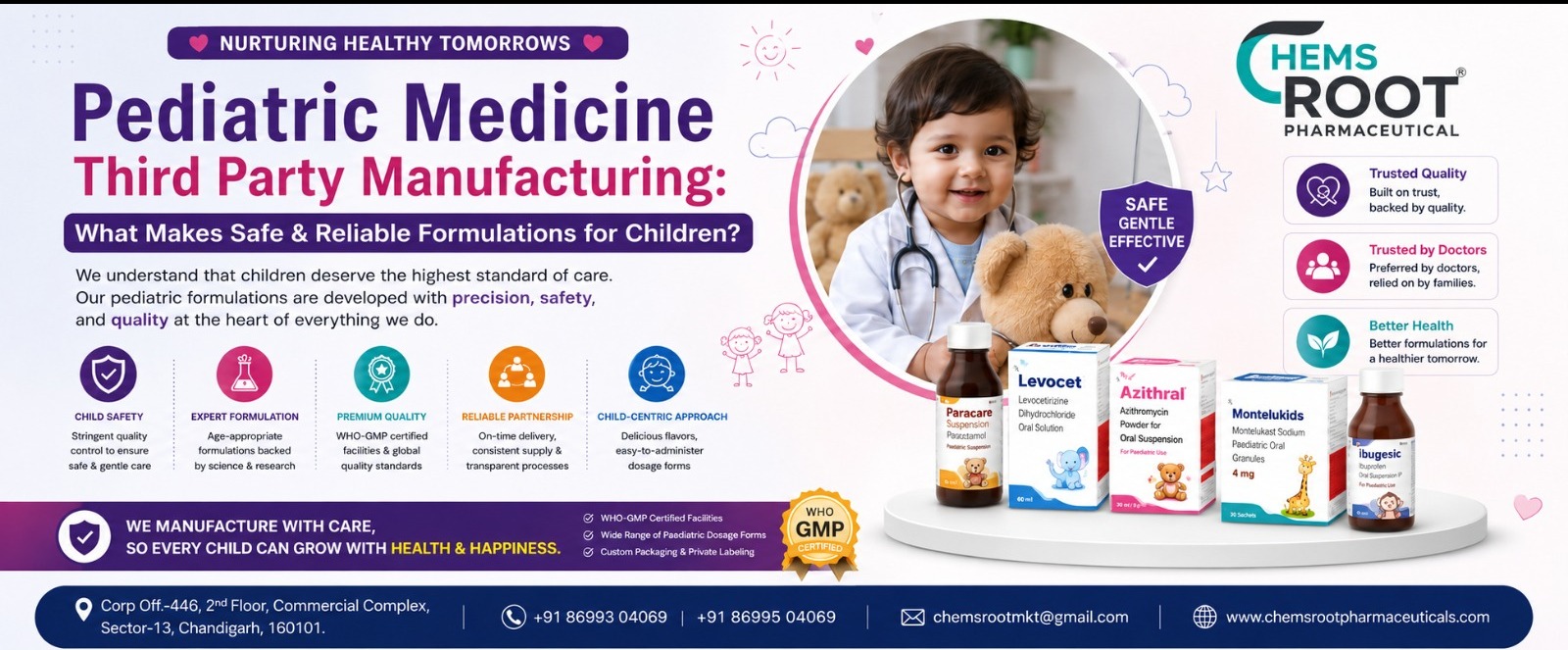
Children have unique healthcare needs, and their medicines must be developed with extra care. Unlike adult formulations, pediatric medicines require age-appropriate dosages, acceptable taste profiles, and stringent quality standards to ensure safety and effectiveness. As the demand for child-friendly pharmaceutical products continues to grow, pharmaceutical companies, distributors, and healthcare providers are increasingly seeking reliable pediatric medicine third party manufacturing partners.
Choosing the right manufacturer is about more than production capacity. It requires evaluating formulation expertise, regulatory compliance, quality systems, and the ability to consistently produce medicines that meet pediatric healthcare requirements.
Why Pediatric Medicines Require Specialized Manufacturing
Children's bodies process medicines differently from adults. Factors such as age, weight, metabolism, and organ development influence how medicines are absorbed and utilized. Because of these differences, pediatric formulations must be carefully designed to deliver the correct therapeutic effect while minimizing potential risks.
Manufacturers must also ensure that products are easy for children to consume. This often involves developing formulations with improved taste, convenient dosage forms, and accurate dosing instructions.
These additional considerations make pediatric pharmaceutical manufacturing one of the most specialized areas within the industry.
Common Pediatric Dosage Forms
A reliable third party manufacturer should be capable of producing a variety of dosage forms suitable for children.
These commonly include:
- Oral syrups
- Dry syrups
- Suspensions
- Dispersible tablets
- Chewable tablets
- Oral drops
- Pediatric sachets
- Nutritional supplements
Each dosage form requires different manufacturing techniques, stability studies, and quality checks to ensure consistent performance.
Important Quality Standards for Pediatric Manufacturing
Quality plays an even greater role when manufacturing medicines intended for children. Every stage of production should follow validated processes supported by comprehensive quality assurance systems.
Key quality measures include:
- Raw material testing
- Microbiological evaluation
- In-process quality monitoring
- Finished product testing
- Stability studies
- Packaging verification
- Batch documentation
These processes help ensure that every product meets established pharmaceutical quality standards before reaching the market.
Formulation Considerations for Children's Medicines
Developing pediatric formulations involves balancing effectiveness with patient acceptability.
Manufacturers often focus on factors such as:
Taste Masking
Many active pharmaceutical ingredients have a naturally bitter taste. Appropriate formulation techniques help improve palatability without affecting medicine quality.
Accurate Dosing
Children require doses based on age or body weight. Manufacturing processes must therefore ensure uniform drug distribution and precise dosage accuracy.
Product Stability
Medicines should remain stable throughout transportation, storage, and normal shelf life. Stability testing helps confirm that product quality remains consistent under recommended storage conditions.
Safe Excipients
Inactive ingredients used in pediatric formulations should be carefully selected to ensure compatibility and safety for children.
Benefits of Third Party Manufacturing for Pediatric Medicines
Outsourcing production allows pharmaceutical companies to expand their pediatric product portfolio without investing in dedicated manufacturing facilities.
Some of the major advantages include:
- Reduced manufacturing costs
- Faster product development
- Access to experienced formulation teams
- Regulatory documentation support
- Modern manufacturing infrastructure
- Flexible production capacity
These benefits enable businesses to respond more efficiently to changing healthcare demands while maintaining consistent product quality.
How to Evaluate a Pediatric Manufacturing Partner
Before selecting a third party manufacturer, it is useful to assess several important capabilities.
Look for a company that offers:
- GMP-compliant manufacturing facilities
- Experience in pediatric formulations
- Modern quality control laboratories
- Product development expertise
- Comprehensive documentation support
- Reliable production timelines
- Transparent communication throughout the project
A thorough evaluation reduces business risks and supports long-term collaboration.
Packaging Matters Just as Much as the Medicine
Packaging plays an important role in maintaining product quality and ensuring ease of use for caregivers.
Features such as child-resistant closures, accurate measuring devices, tamper-evident packaging, and clear labeling improve safety while helping parents administer medicines correctly.
Reliable manufacturers consider packaging an integral part of the overall product quality process rather than an afterthought.
Growing Demand Across North India
The demand for pediatric medicines continues to increase across hospitals, clinics, pharmacies, and healthcare institutions in North India. Businesses operating in Chandigarh, Punjab, Haryana, Himachal Pradesh, and nearby regions often seek manufacturing partners that can supply high-quality pediatric formulations while maintaining consistent production standards.
A strategically located manufacturer can also improve logistics, inventory management, and supply chain coordination for distributors and pharmaceutical marketers serving multiple states.
Choosing a Partner That Supports Long-Term Growth
Successful pediatric medicine manufacturing depends on scientific expertise, validated production systems, and continuous quality monitoring. While pricing and production capacity remain important, businesses should also evaluate technical capabilities, regulatory compliance, and formulation experience before making a decision.
Companies such as Chemsroot Pharmaceutical support pharmaceutical businesses with third party manufacturing solutions across multiple therapeutic categories, including pediatric formulations. By carefully reviewing a manufacturer's infrastructure, quality systems, and development capabilities, distributors, stockists, healthcare organizations, and pharmaceutical marketers can build reliable partnerships that support sustainable growth and consistently deliver high-quality medicines for children.