A quotation for this ointment is not comparable until you confirm the exact active ingredients, assay basis, vehicle, finished-product tests, packaging, and stability claim. By checking those specifications in order, you can distinguish a documented fixed-dose product from a generic combination proposal and request evidence that matches your intended market.
Key takeaways
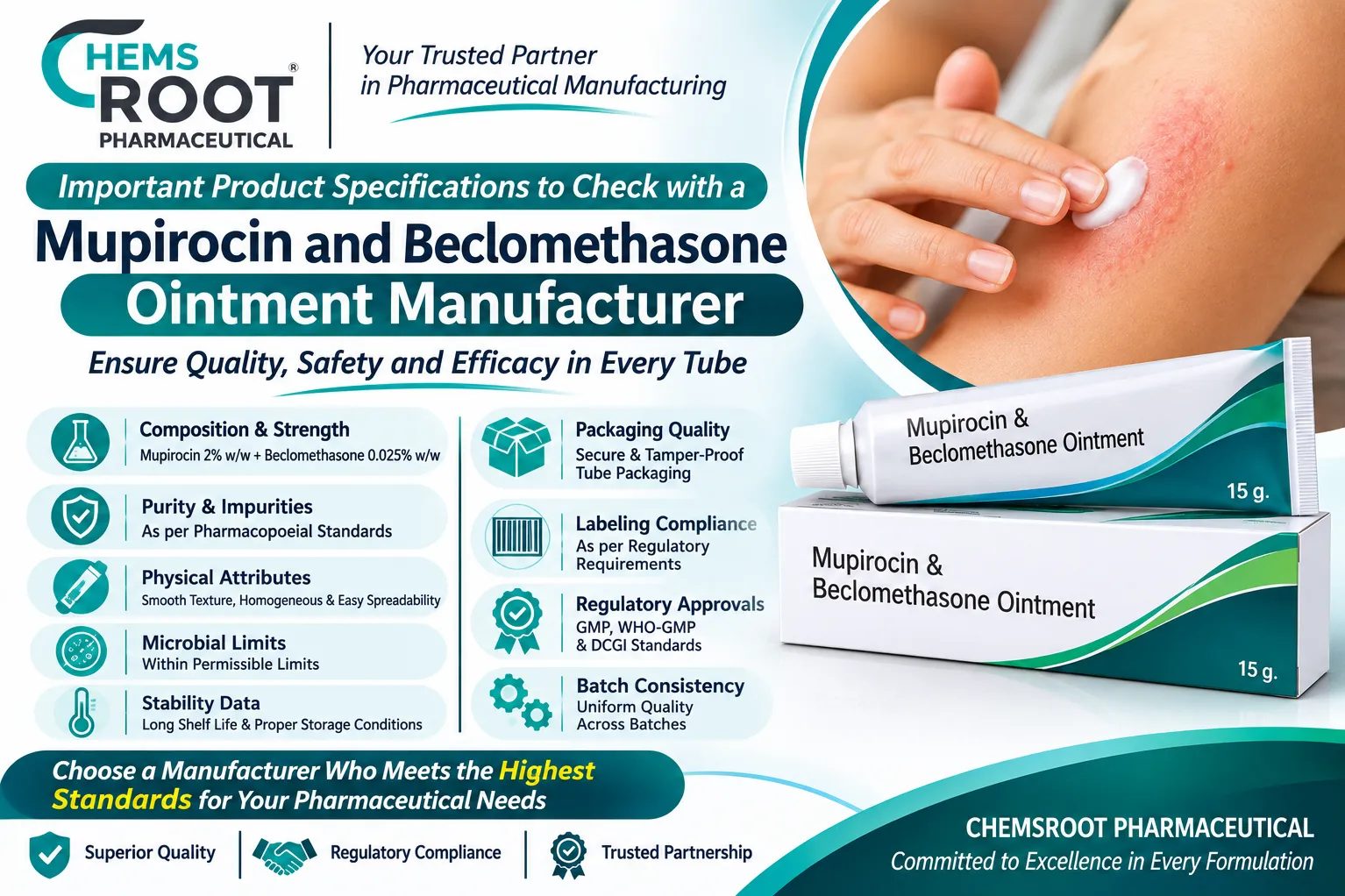
- Require mupirocin 2% w/w and beclomethasone dipropionate 0.025% w/w.
- Ask for finished-product specifications, assay limits, homogeneity tests, and ointment-base details.
- Verify tube material, closure, storage claim, stability data, and cross-contamination controls.
- Compare quotations only after reviewing a batch-specific supplier dossier.
Confirm the Exact Combination, Strength, and Regulatory Identity
A compliant quotation must identify the exact mupirocin 2% ointment and corticosteroid product, not a generic antibacterial-steroid combination. Require the formula to state mupirocin 2% w/w, equal to 20 mg/g, plus beclomethasone dipropionate 0.025% w/w. Reject “beclomethasone” alone: the ester, salt, and potency basis define the product identity.
Ask the manufacturer to provide:
- The approved dosage form, indication, strength, pack size, manufacturing site, and target market.
- The mupirocin assay basis: mupirocin free acid or an equivalent amount of mupirocin calcium.
- The corticosteroid assay basis, expressed specifically as beclomethasone dipropionate.
- The national registration or marketing-authorisation status for the exact product, not merely separate monographs for mupirocin and beclomethasone.
- Evidence of fixed-dose combination approval in every country where you will sell it.
A fixed antibiotic–corticosteroid product can require product-specific review, even when both ingredients are individually recognised. Confirm that the technical file explains why antibacterial and corticosteroid treatment are combined, then states the approved treatment duration, age restrictions, occlusion warnings, and exposure limits for damaged or extensively treated skin.
Prolonged, extensive, or occluded use can increase corticosteroid absorption. Stop the comparison if the supplier cannot identify the exact registered combination and its manufacturing site.
Demand a Finished-Product Specification and a Defensible Ointment Base
A finished-product specification must state more than the names of mupirocin and beclomethasone. Reject a document that says only “passes testing”; each test needs numerical acceptance criteria tied to the released ointment.
- Request limits for identification, assay of each active, degradation products or related substances, appearance, net content, homogeneity, consistency or viscosity, and extrudability.
- Ask whether the ointment is sterile or nonsterile. For a nonsterile product, demand validated microbial limits for topical ointment, including total microbial-count limits and absence of specified objectionable organisms.
- Obtain the qualitative and quantitative list of excipients, ointment base type, preservative status, antioxidants, and allergen declarations. Polyethylene-glycol vehicles are common for mupirocin, while corticosteroid products can use oleaginous or emulsion bases.
- Require compatibility evidence for both actives in the selected vehicle: drug release, crystal growth, phase separation, homogeneity after storage, and separate assay drift or degradation.
- If the formula contains water or an emulsion system, request the preservative rationale, selected preservative concentration, and preservative-effectiveness data. For anhydrous products, ask for the contamination-control rationale rather than assuming that no preservative means no microbiological risk.
The ointment base must suit the treatment site. It can support dry, cracked, or occluded skin, but a greasy ointment can spread poorly on hairy sites and trap moisture on weeping areas, where a cream or lotion may be easier to apply and remove.
Check Mixing, Homogeneity, Filling, and Cross-Contamination Controls
A batch record proves reproducibility only when it controls every stage from weighing to tube filling. Request validated or scientifically justified semisolid manufacturing controls covering premixing, heating, cooling, addition of each active, mixing, homogenisation, bulk holding, and filling. It must state mixing speed, time, temperature limits, order of addition, and maximum hold times.
Excessive heat can degrade mupirocin or the corticosteroid; inadequate heating can leave waxes or other base components poorly dispersed.
Ask for:
- Mixing and homogenisation validation, including the equipment, batch size, sampling locations, acceptance limits, and analytical-method validation for this ointment matrix.
- Homogeneity testing that samples multiple bulk locations or finished units, not one top-layer portion from one tube.
- Filling records showing fill-weight accuracy, bulk-to-fill reconciliation, tube crimp or closure checks, and controls for air pockets and underfilled packs.
- Batch documentation linking the released batch to the approved formula and site: batch size, manufacturing and expiry dates, deviations, out-of-specification investigation status, test methods, and release decision.
Evidence typeWhat it provesWhy it mattersTop-only sampleOne location met assayIt cannot prove uniformity through the tubeDistributed samplesMultiple locations or units met limitsIt detects first, middle, and last-portion variationValidated methodThe assay works in this semisolid matrixVehicle components cannot mask active-content differences
Require documented line clearance, equipment-cleaning validation, campaign segregation, and swab or rinse results. This cross-contamination control is essential for antibiotic and steroid products.
Specify the Container, Label, Storage Claim, and Stability Evidence
A collapsible tube usually limits repeated air exposure, finger contact, and contamination better than a wide-mouth jar. That advantage does not replace evidence: specify the material, internal coating, closure, nominal fill, leak testing, crimp or seal requirements, and container-closure compatibility.
Pack formatKey risk to compareEvidence to requestCollapsible aluminium tubeMetal interaction, pinholes, poor crimpInternal coating, seam or crimp controls, leak test, extractables and leachables assessmentLaminate or plastic tubePermeation, sorption, nozzle damageMaterial layers, closure torque, leak test, compatibility and in-use dataWide-mouth jarRepeated finger contact and air exposureClosure seal, microbial-control rationale, compatibility and simulated-use data
Confirm the label carries the product name, mupirocin and beclomethasone strengths, ointment dosage form, net quantity, batch number, manufacturing date, expiry date, storage temperature, warnings, manufacturer details, and market-specific registration information. Ask for the exact date format and batch-number structure.
Require long-term and accelerated stability testing suitable for the proposed market. The protocol should examine appearance, colour, odour, consistency or rheology, phase separation, assay of both actives, degradation products, microbial quality, net content, and container-closure integrity.
Demand data from the same formula, fill size, and pack—not API stability alone. Request in-use stability after opening, covering repeated nozzle or finger contact, heat exposure, and removal from the original tube. One shelf life does not automatically apply to every pack size, market, or storage condition.
Use a Batch-Specific Supplier Dossier to Compare Quotations
A quotation is not comparable until every supplier reports the same formula, test basis, pack, and regulatory position. Use this contract manufacturer comparison sheet:
FieldRecord exactlyReject or verifyFormulaMupirocin 2% w/w (20 mg/g); beclomethasone dipropionate strength; free-acid or calcium-equivalent basisReject “beclomethasone” aloneExcipients and baseQuantities, preservative status, vehicle, pack configurationConfirm compatibility and intended marketQuality limitsAssay, related substances, microbial limits, homogeneity, viscosity or consistency, extrudability, net contentReject “passes testing”EvidenceTest methods or references, stability claim, MOQ, lead time, target-market registration statusMatch the proposed site and market
Before selecting a third-party pharmaceutical manufacturing partner, request a batch-specific certificate of analysis. It must show identification, assay for mupirocin and beclomethasone dipropionate, related substances, appearance, microbial results, net content, and physical-property tests, together with batch number, batch size, manufacturing date, expiry date, packaging configuration, and approved site.
Request the master formula or controlled product specification, manufacturing and packing records where available, current GMP documentation or inspection evidence, cleaning-validation summary, stability reports, and deviation or out-of-specification records. Ask whether the quoted ointment is already produced at that site or needs development, scale-up, regulatory review, analytical validation, or stability batches.
For a Chandigarh decision, question Chemsroot Pharmaceutical against this same evidence rather than a product-range claim. Confirm ownership of the formula, artwork, registration file, change notifications, complaints, and recalls. A low price fails the comparison if it excludes compliant packaging or market-specific documents.
Related products
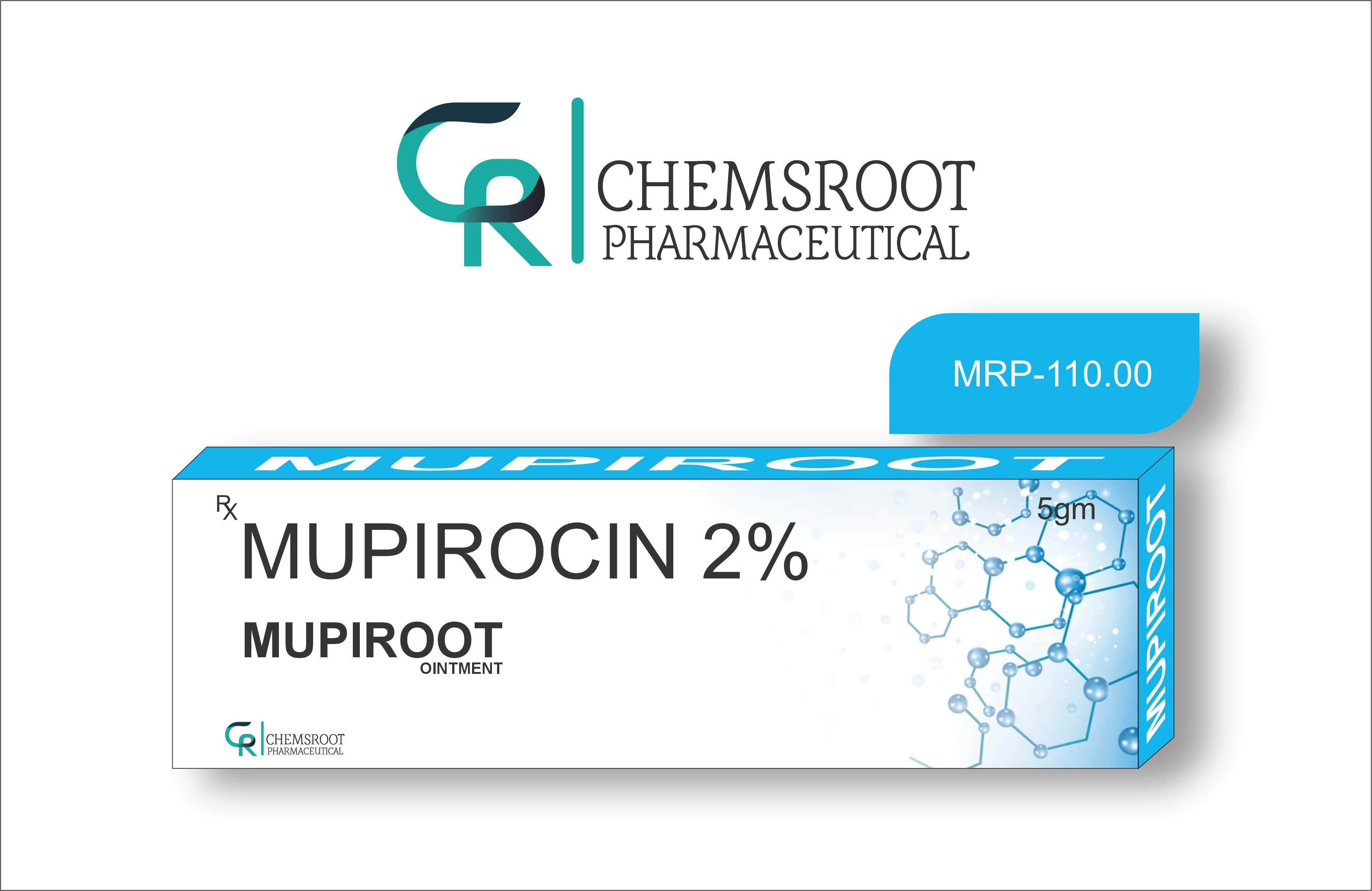
Composition-Mupirocin 2% Ointment
View product →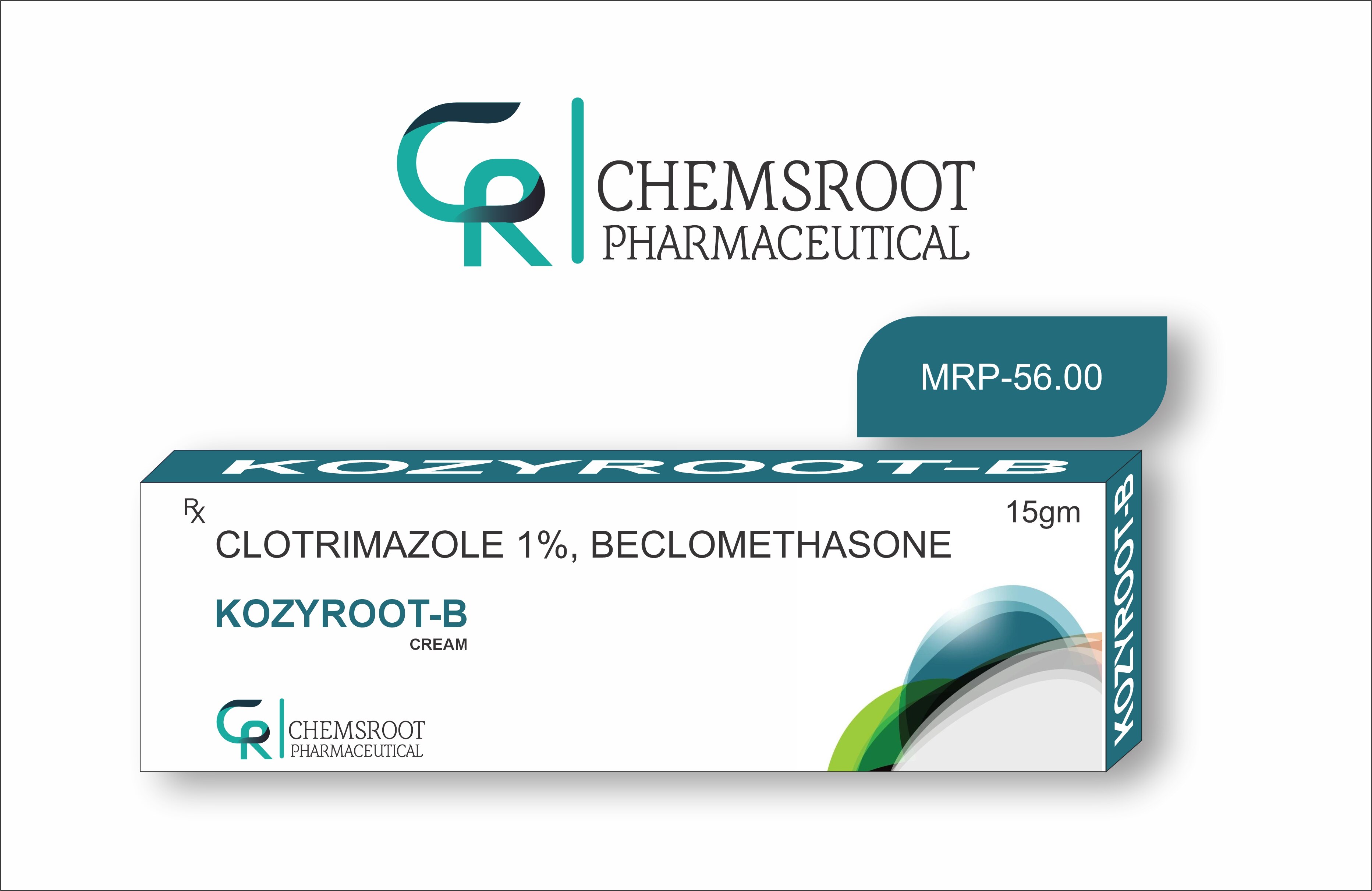 Clotrimazole 1% , Beclomethasone Cream
Composition-Clotrimazole 1% , Beclomethasone Cream
Frequently asked questions
- What strengths must the product specification state?
- The formula must state mupirocin 2% w/w, equal to 20 mg/g, and beclomethasone dipropionate 0.025% w/w. The specification must identify the exact corticosteroid ester rather than saying only “beclomethasone.”
- What should a finished-product specification for this ointment include?
- Request identity tests, assay limits for both active ingredients, appearance, fill weight, microbial limits, homogeneity or content-uniformity results, and the ointment-base composition or functional description.
- Which manufacturing controls should you check?
- Ask how the manufacturer controls mixing time, temperature, order of addition, sampling from different filling stages, equipment cleaning, line clearance, and cross-contamination between antibiotic and corticosteroid products.
- What packaging and stability information belongs in the quotation?
- Confirm the tube material, closure, nominal fill, tamper evidence, label wording, storage temperature, light or heat precautions, in-use instructions, expiry period, and stability evidence supporting the stated shelf life.
- How can you compare manufacturer quotations fairly?
- Use a batch-specific dossier containing the formula, finished-product specification, test methods, certificate of analysis, packaging details, manufacturing licence information, stability data, and quality-control records.
Related products
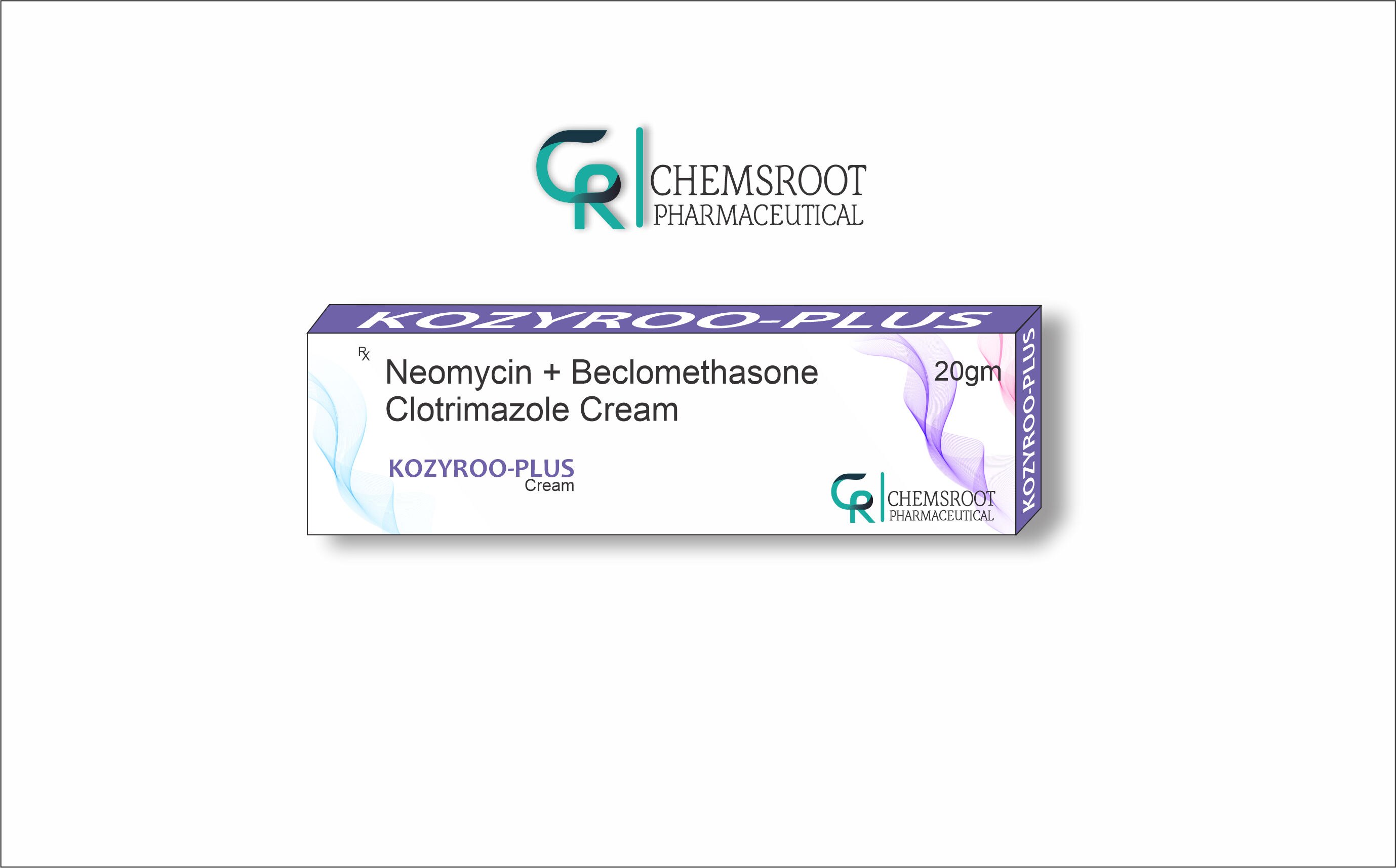 Neomycin + Beclomethasone Clotrimazole Cream
Composition-Neomycin + Beclomethasone Clotrimazole Cream
View product →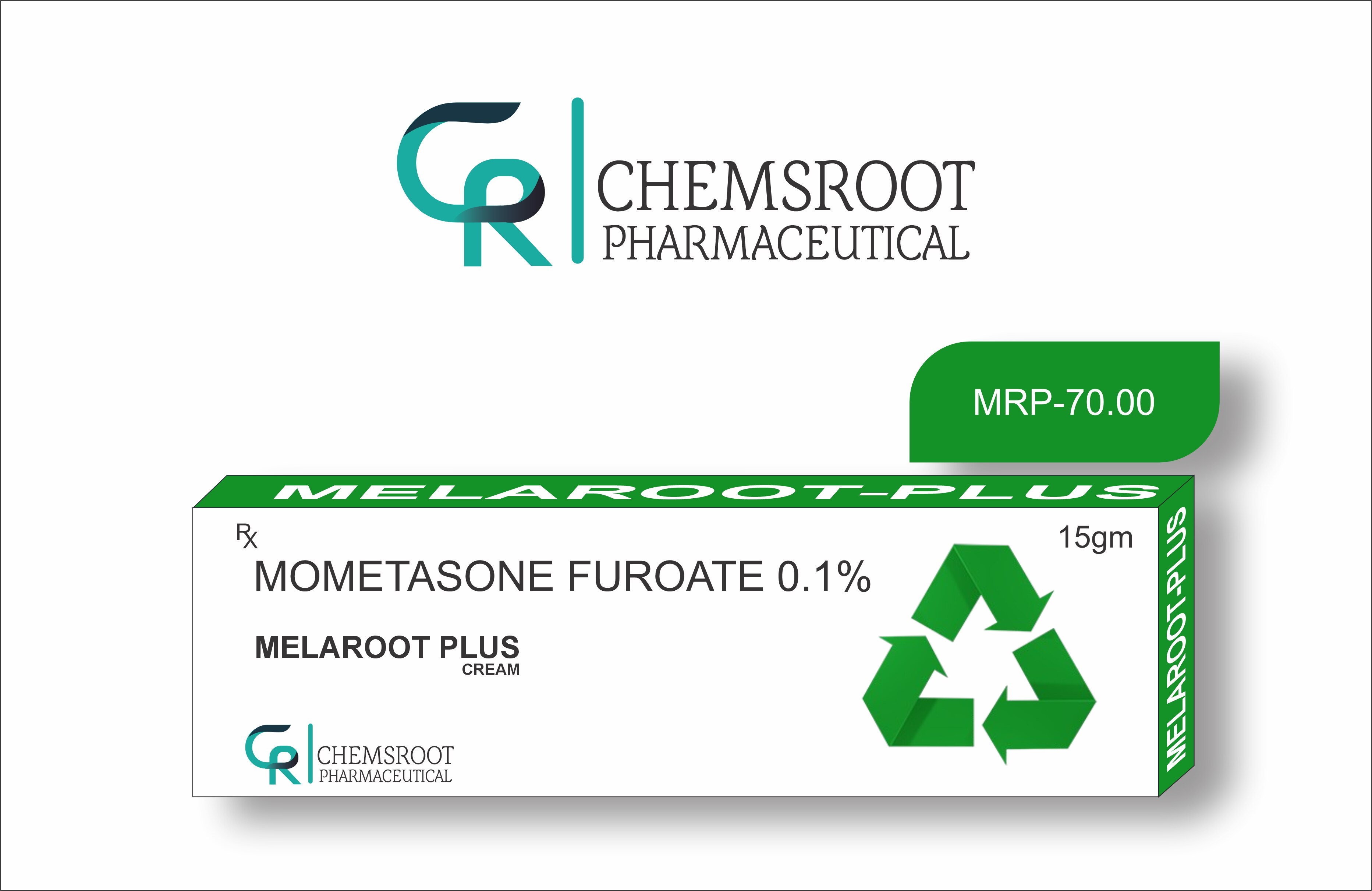 Mometasone Furoate 0.1% Cream
Composition-Mometasone Furoate 0.1% Cream
Keywords