


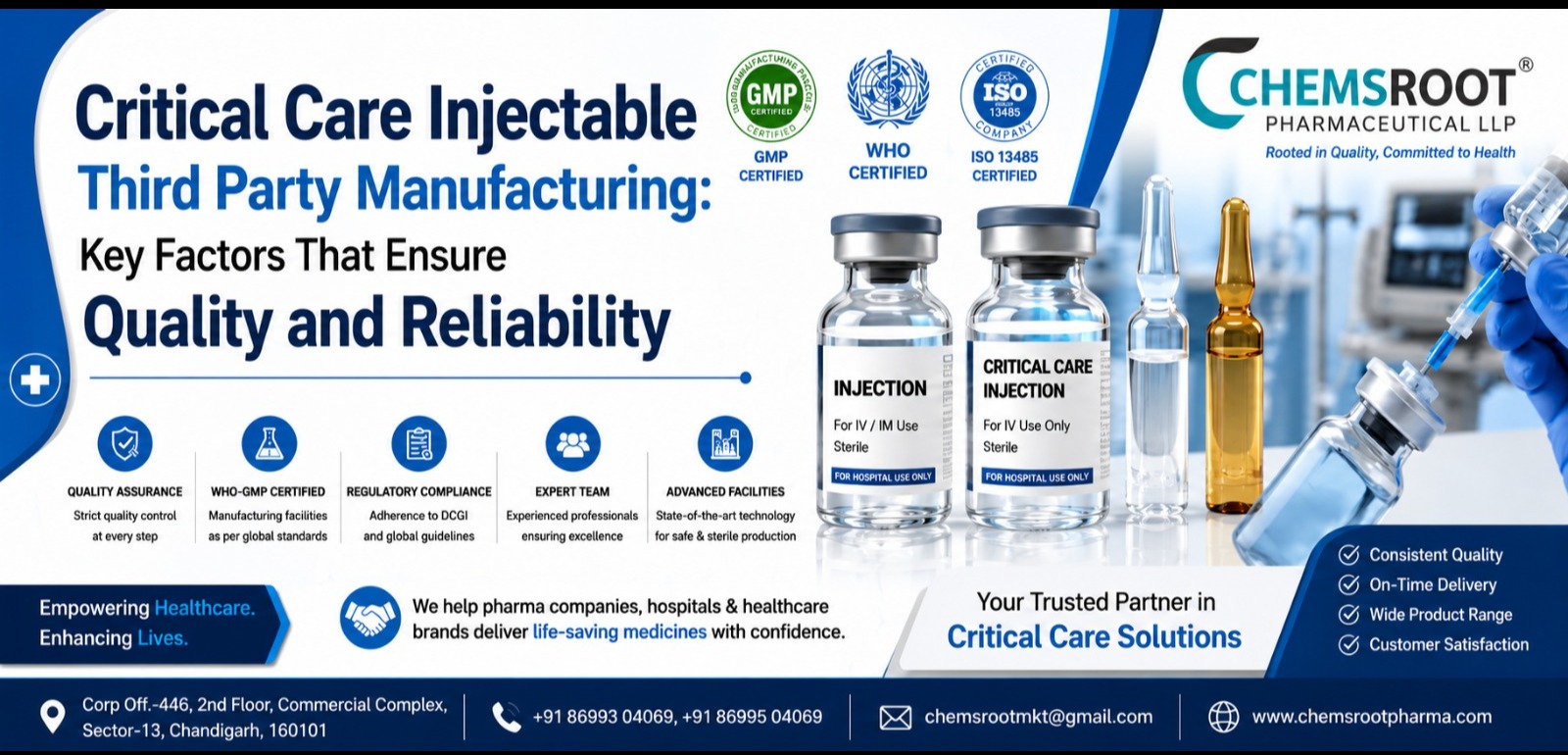
Critical care medicines are among the most important pharmaceutical products used in hospitals and emergency healthcare settings. These injectable formulations are administered in intensive care units (ICUs), emergency departments, operation theatres, and trauma centers, where timely treatment and consistent product quality are essential. As demand for high-quality injectable medicines continues to grow, pharmaceutical companies and healthcare suppliers are increasingly looking for dependable critical care injectable third party manufacturing partners.
Selecting the right manufacturer requires careful evaluation of production capabilities, quality systems, regulatory compliance, and technical expertise. A reliable manufacturing partner helps ensure that critical care medicines meet the high standards expected by healthcare professionals and regulatory authorities.
What Are Critical Care Injectables?
Critical care injectables are medicines used to manage severe or life-threatening medical conditions that require immediate attention. These products are typically administered under medical supervision in hospitals and specialized healthcare facilities.
Common categories include:
- Antibiotic injections
- Cardiac emergency medicines
- Intravenous fluids
- Anti-infective injections
- Pain management injectables
- Anaesthetic agents
- Electrolyte solutions
- Gastrointestinal emergency medications
Because these medicines are often used in urgent situations, maintaining quality and consistency throughout the manufacturing process is extremely important.
Why Injectable Manufacturing Requires Advanced Infrastructure
Unlike many oral dosage forms, injectable medicines must be manufactured under highly controlled conditions to prevent contamination and maintain sterility.
A quality-focused manufacturing facility generally includes:
- Cleanroom production areas
- Sterile filling equipment
- Controlled environmental monitoring
- Advanced water purification systems
- Automated production processes
- Specialized quality control laboratories
These facilities help create an environment where injectable products can be manufactured safely and consistently.
The Importance of Sterility in Critical Care Medicines
Sterility is one of the most important quality requirements for injectable pharmaceutical products. Since injectables bypass the body's natural defense mechanisms, even minimal contamination can affect patient safety.
Manufacturers maintain sterility through:
- Controlled manufacturing environments
- Validated sterilization procedures
- Environmental monitoring
- Routine microbiological testing
- Strict personnel hygiene protocols
- Sterile packaging systems
These measures are integrated throughout the manufacturing process rather than being limited to final product testing.
Essential Quality Control Measures
A reliable third party manufacturer follows multiple quality checks before, during, and after production.
These commonly include:
- Raw material testing
- In-process quality inspections
- Sterility testing
- Stability studies
- Batch verification
- Packaging integrity checks
- Documentation review
Comprehensive quality control helps ensure that every batch meets established pharmaceutical standards before distribution.
What to Consider When Choosing a Manufacturing Partner
Selecting a manufacturing company should involve more than comparing production costs. Businesses should evaluate both technical capabilities and operational reliability.
Important considerations include:
Manufacturing Experience
Experience in sterile injectable production is an important indicator of technical capability and process consistency.
Regulatory Compliance
Manufacturing facilities should follow GMP guidelines and maintain proper documentation to support regulatory requirements.
Product Portfolio
A manufacturer with expertise across multiple therapeutic categories can better support future business expansion.
Production Capacity
Scalable manufacturing helps businesses respond efficiently to increasing market demand without compromising quality.
Supply Chain Reliability
Consistent production schedules and dependable deliveries are essential for hospitals, distributors, and healthcare institutions that rely on uninterrupted medicine availability.
Benefits of Third Party Manufacturing
Third party manufacturing allows pharmaceutical companies to access specialized production facilities without investing in expensive infrastructure.
Some advantages include:
- Reduced capital investment
- Faster product launches
- Access to experienced technical teams
- Modern manufacturing technology
- Flexible production volumes
- Comprehensive regulatory documentation
This model enables businesses to focus on product marketing, distribution, and customer relationships while manufacturing is handled by qualified professionals.
Why Chandigarh Is Emerging as a Pharmaceutical Hub
Chandigarh has become an important pharmaceutical business destination due to its strategic location and connectivity with Punjab, Haryana, Himachal Pradesh, and other northern states. Many pharmaceutical distributors, healthcare organizations, and institutional buyers prefer manufacturers in this region because of efficient logistics and access to established pharmaceutical infrastructure.
Working with a manufacturer located in this pharmaceutical ecosystem can improve coordination, shorten supply timelines, and support long-term business growth.
Building Confidence Through Quality Manufacturing
Critical care injectable manufacturing demands precision, consistency, and strict adherence to quality standards. Businesses should evaluate manufacturing infrastructure, sterility assurance systems, quality documentation, technical expertise, and production reliability before selecting a third party manufacturing partner.
Companies such as Chemsroot Pharmaceutical provide third party manufacturing support across various pharmaceutical segments, including injectable formulations. By partnering with a manufacturer that emphasizes quality systems, regulatory compliance, and consistent production practices, pharmaceutical businesses can strengthen their product portfolio while meeting the expectations of hospitals, distributors, and healthcare providers.
Choosing the right manufacturing partner is not only a business decision but also an investment in product quality, operational reliability, and long-term success in the growing critical care pharmaceutical market.