
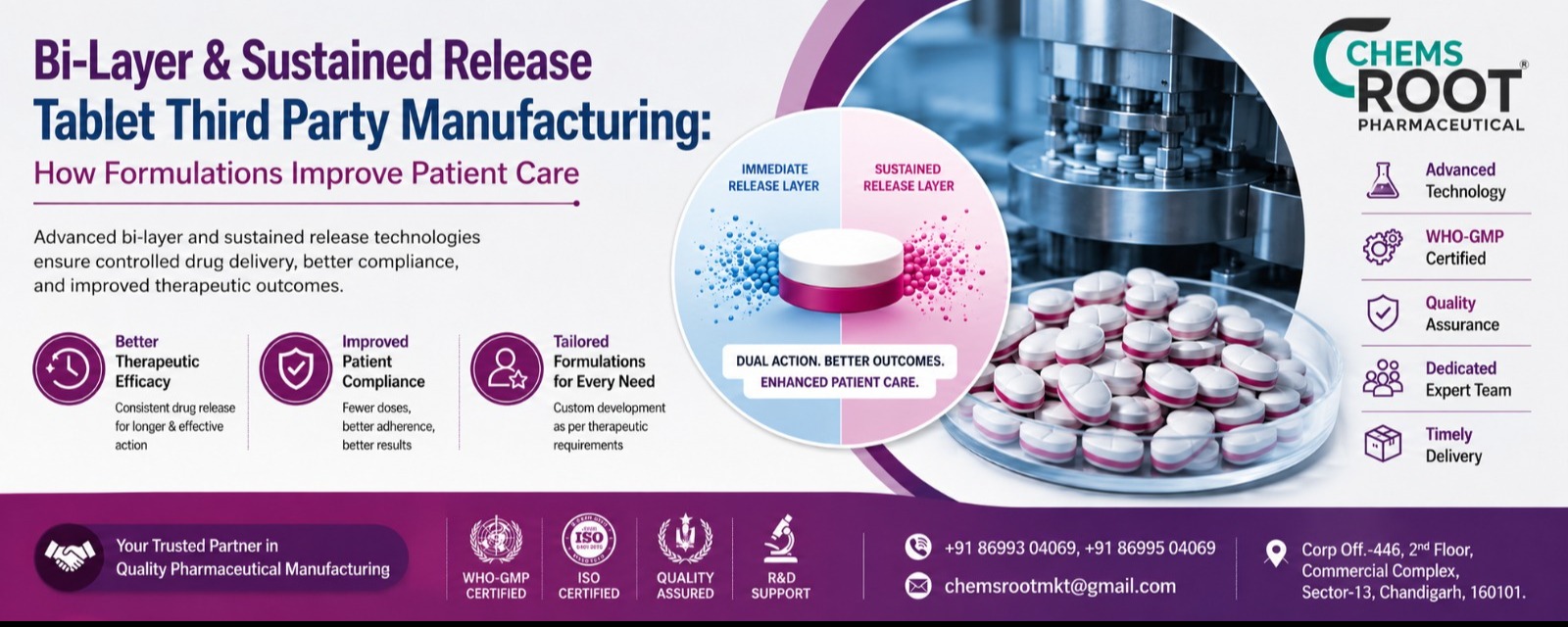
Modern pharmaceutical manufacturing has moved well beyond conventional tablets. Today, healthcare providers and pharmaceutical companies increasingly prefer advanced drug delivery systems that improve treatment outcomes, simplify dosing schedules, and enhance patient compliance. Among the most widely adopted innovations are bi-layer tablets and sustained release (SR) tablets, both of which require specialized manufacturing expertise.
If your business is planning to introduce advanced formulations, understanding how bi-layer and sustained release tablet third party manufacturing works can help you choose the right manufacturing partner and build a competitive product portfolio.
Understanding Bi-Layer Tablets
A bi-layer tablet combines two separate layers within a single tablet. Each layer may contain different active pharmaceutical ingredients or release the same ingredient at different rates.
This design allows manufacturers to develop medicines that address multiple therapeutic needs while reducing the number of tablets patients need to take.
Bi-layer tablets are commonly used for:
- Hypertension management
- Diabetes care
- Pain management
- Cardiovascular diseases
- Nutritional supplements
- Combination therapies
By combining compatible medications into one dosage form, pharmaceutical companies can improve convenience without compromising efficacy.
What Are Sustained Release Tablets?
Sustained release tablets are designed to release the active ingredient gradually over an extended period rather than all at once. This controlled release helps maintain more consistent drug levels in the bloodstream.
Instead of requiring multiple doses throughout the day, many sustained release medicines can be taken once or twice daily, depending on the formulation.
Benefits include:
- Longer therapeutic effect
- Reduced dosing frequency
- Better patient adherence
- More stable plasma drug concentration
- Lower chances of missed doses
These advantages make sustained release formulations increasingly popular across several therapeutic segments.
Why Advanced Tablet Manufacturing Requires Specialized Expertise
Producing advanced formulations involves much more than compressing ingredients into tablet form. Manufacturers must carefully control formulation design, compression parameters, coating techniques, and release profiles.
Reliable third party manufacturers invest in:
- Modern tablet compression machines
- Precision formulation development
- Process validation systems
- Advanced analytical laboratories
- Stability testing facilities
- Experienced formulation scientists
Every stage contributes to achieving the intended drug release pattern while maintaining product quality and consistency.
Applications Across Therapeutic Categories
Bi-layer and sustained release technologies are used across multiple pharmaceutical specialties.
Some common applications include:
Cardiology
Many blood pressure and heart medications benefit from controlled drug release to provide stable therapeutic effects throughout the day.
Diabetes Management
Combination therapy tablets allow patients to receive two compatible medicines in a single dosage form, improving convenience.
Pain Management
Sustained release formulations help provide longer-lasting pain relief while reducing frequent dosing.
Neurology
Several neurological medications rely on controlled release mechanisms to maintain consistent drug levels and improve treatment effectiveness.
Nutraceuticals
Advanced tablet technologies are also being adopted for vitamins, minerals, and dietary supplements to improve absorption and user convenience.
Key Factors When Selecting a Third Party Manufacturing Partner
Not every pharmaceutical manufacturer has the capability to produce advanced dosage forms successfully. Before finalizing a partnership, consider several important factors.
Look for a manufacturer that offers:
- GMP-compliant manufacturing facilities
- Modern formulation development capabilities
- Dedicated quality assurance systems
- In-house analytical testing
- Product stability studies
- Regulatory documentation support
- Flexible production capacity
These capabilities contribute to consistent product quality and smoother regulatory processes.
Common Challenges in Manufacturing Advanced Tablets
Bi-layer and sustained release formulations require careful process control. Some common manufacturing challenges include:
- Layer separation
- Uniform drug distribution
- Compression consistency
- Controlled release accuracy
- Moisture sensitivity
- Stability during storage
Experienced manufacturers use validated processes and continuous quality monitoring to minimize these challenges and ensure reliable production.
Why Third Party Manufacturing Makes Business Sense
Developing advanced pharmaceutical formulations requires significant investment in equipment, infrastructure, and technical expertise. Third party manufacturing enables companies to introduce sophisticated products without establishing their own production facilities.
Some practical advantages include:
- Lower manufacturing investment
- Faster product development
- Access to experienced formulation teams
- Easier production scale-up
- Better focus on branding and marketing
- Reduced operational complexity
This model allows pharmaceutical marketers, distributors, and entrepreneurs to expand their portfolios efficiently.
Growing Demand Across North India
The pharmaceutical market in Chandigarh and surrounding regions continues to grow as healthcare providers seek more advanced treatment options. Businesses across Punjab, Haryana, Himachal Pradesh, and nearby states increasingly look for manufacturers capable of producing innovative dosage forms while maintaining high quality standards.
Working with manufacturers located in this pharmaceutical ecosystem can improve supply chain efficiency and simplify collaboration throughout product development.
Building a Strong Product Portfolio with the Right Manufacturing Partner
As demand for advanced drug delivery systems continues to rise, choosing an experienced manufacturing partner becomes increasingly important. Beyond production capacity, businesses should evaluate formulation expertise, regulatory compliance, quality assurance systems, and long-term manufacturing reliability.
Companies such as Chemsroot Pharmaceutical support pharmaceutical businesses by offering third party manufacturing solutions for advanced formulations, including bi-layer and sustained release tablets. Assessing a manufacturer's technical capabilities, infrastructure, and quality practices helps ensure that every product entering the market meets industry expectations.
A dependable manufacturing partnership not only supports consistent product quality but also enables pharmaceutical companies to introduce innovative formulations that address evolving healthcare needs while strengthening their position in a competitive market.