

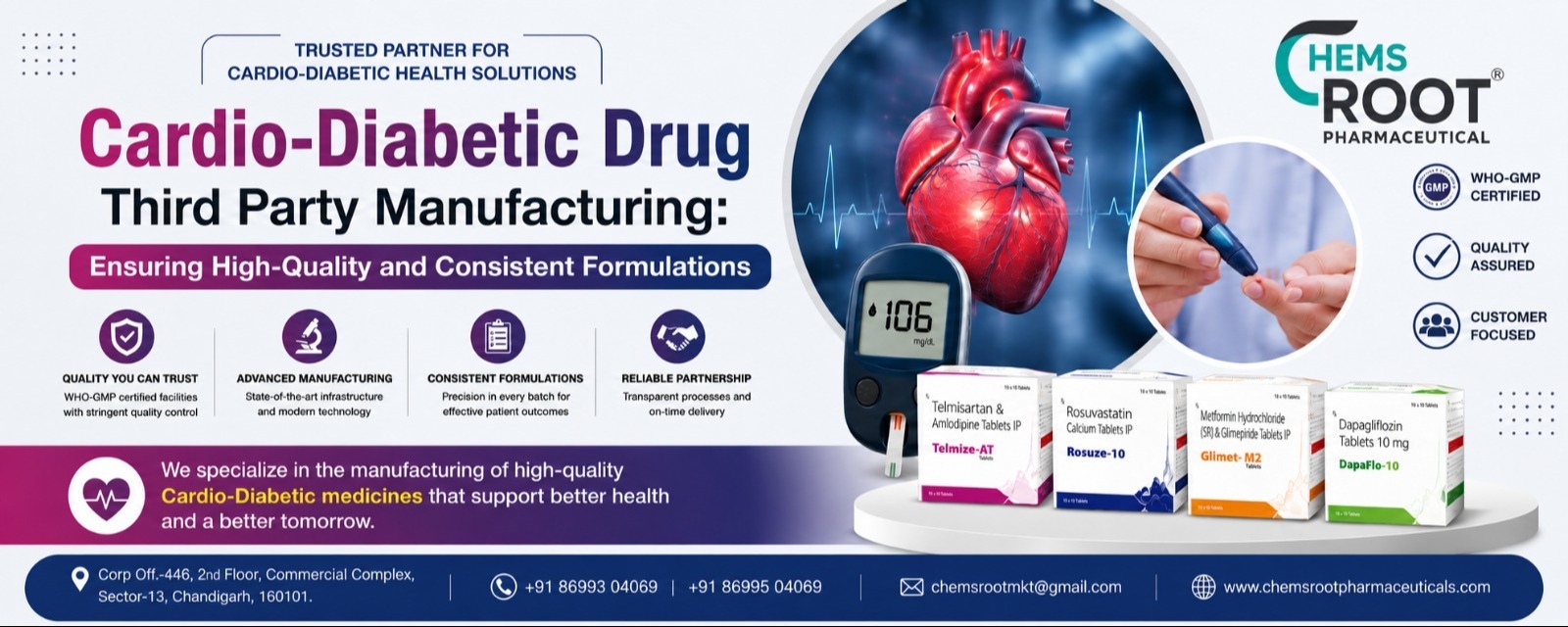
Cardio-diabetic products are commonly associated with long-term therapeutic use, making manufacturing consistency an important consideration for pharmaceutical marketers. Cardio-Diabetic Drug Third Party Manufacturing: Ensuring High-Quality and Consistent Formulations therefore requires attention to manufacturing processes, material controls, documentation, testing, and packaging rather than product pricing alone.
For pharma businesses in Chandigarh planning to build a cardio-diabetic portfolio, understanding these factors can make manufacturer evaluation more systematic.
Why Manufacturing Consistency Matters
A pharma marketer may procure the same formulation repeatedly over several production cycles. The expectation is that every batch is manufactured according to established specifications and applicable quality requirements.
Important areas can include:
- Active ingredient specifications
- Raw-material controls
- Manufacturing-process parameters
- In-process checks
- Finished-product testing
- Batch documentation
- Packaging integrity
The requirements vary according to formulation and dosage form.
Raw Materials Form the Starting Point
Reliable production begins with appropriate raw-material handling.
A manufacturing facility should have defined systems for receiving, identifying, storing, and issuing pharmaceutical materials. Buyers evaluating a manufacturer can ask how raw materials and active pharmaceutical ingredients are controlled before entering production.
This provides useful information about the overall manufacturing system.
Documentation Supports Traceability
Documentation is another important consideration.
Batch records help establish what materials were used, how manufacturing proceeded, what packaging was applied, and which checks were performed.
For businesses building larger cardio-diabetic portfolios across Chandigarh and neighbouring northern Indian markets, documentation becomes increasingly important as product numbers and repeat manufacturing cycles grow.
Packaging Needs Equal Attention
A suitable formulation still requires appropriate packaging.
The selected packaging should be compatible with the product and intended storage conditions. Pharma businesses should discuss strip, blister, bottle, carton, and other available options according to the dosage form.
Transport and storage conditions across the intended distribution network should also be considered.
What Should Buyers Evaluate
Before selecting a manufacturing arrangement, ask about manufacturing capabilities, applicable licences and certifications, available formulations, testing procedures, batch quantities, packaging choices, documentation, and expected timelines.
Chemsroot Pharmaceutical supports pharmaceutical businesses exploring third-party manufacturing across multiple therapeutic segments. For cardio-diabetic products, a structured discussion about formulation requirements and manufacturing capabilities can help marketers plan their portfolio more confidently.
The right manufacturing decision is therefore not based on one factor. Quality systems, consistency, documentation, packaging, commercial feasibility, and dependable repeat production all deserve consideration.