
Quality is the foundation of the pharmaceutical industry. Whether medicines are manufactured for hospitals, pharmacies, distributors, or healthcare institutions, every product must meet strict standards before it reaches patients. Two terms that frequently appear during the evaluation of pharmaceutical manufacturers are GMP (Good Manufacturing Practices) and GLP (Good Laboratory Practices).
Although these certifications are often mentioned together, they serve different purposes within pharmaceutical manufacturing. Understanding the difference between GMP and GLP can help pharmaceutical distributors, PCD franchise partners, institutional buyers, and healthcare organizations choose a manufacturing partner with confidence.
What Is GMP?
Good Manufacturing Practices (GMP) are a set of quality guidelines that govern how pharmaceutical products are manufactured, packaged, stored, and distributed. GMP focuses on ensuring that medicines are produced consistently and according to predefined quality standards.
A GMP-compliant facility follows documented procedures throughout the manufacturing process to minimize risks such as contamination, mix-ups, and production errors.
Key areas covered under GMP include:
- Manufacturing processes
- Equipment maintenance
- Production documentation
- Employee training
- Cleanroom management
- Packaging procedures
- Product storage
- Quality assurance systems
These practices help ensure that every production batch maintains consistent quality.
What Is GLP?
Good Laboratory Practices (GLP) relate to laboratory operations rather than manufacturing. GLP establishes quality standards for testing, documentation, and laboratory procedures to ensure that analytical results are accurate, reliable, and reproducible.
Laboratories operating under GLP principles follow structured procedures for testing raw materials, in-process samples, and finished pharmaceutical products.
GLP generally includes:
- Laboratory documentation
- Equipment calibration
- Analytical method validation
- Sample handling
- Data recording
- Quality monitoring
- Personnel responsibilities
Reliable laboratory practices support informed manufacturing decisions and strengthen overall product quality.
How GMP and GLP Differ
Although GMP and GLP are both focused on maintaining high standards, they apply to different parts of pharmaceutical operations.
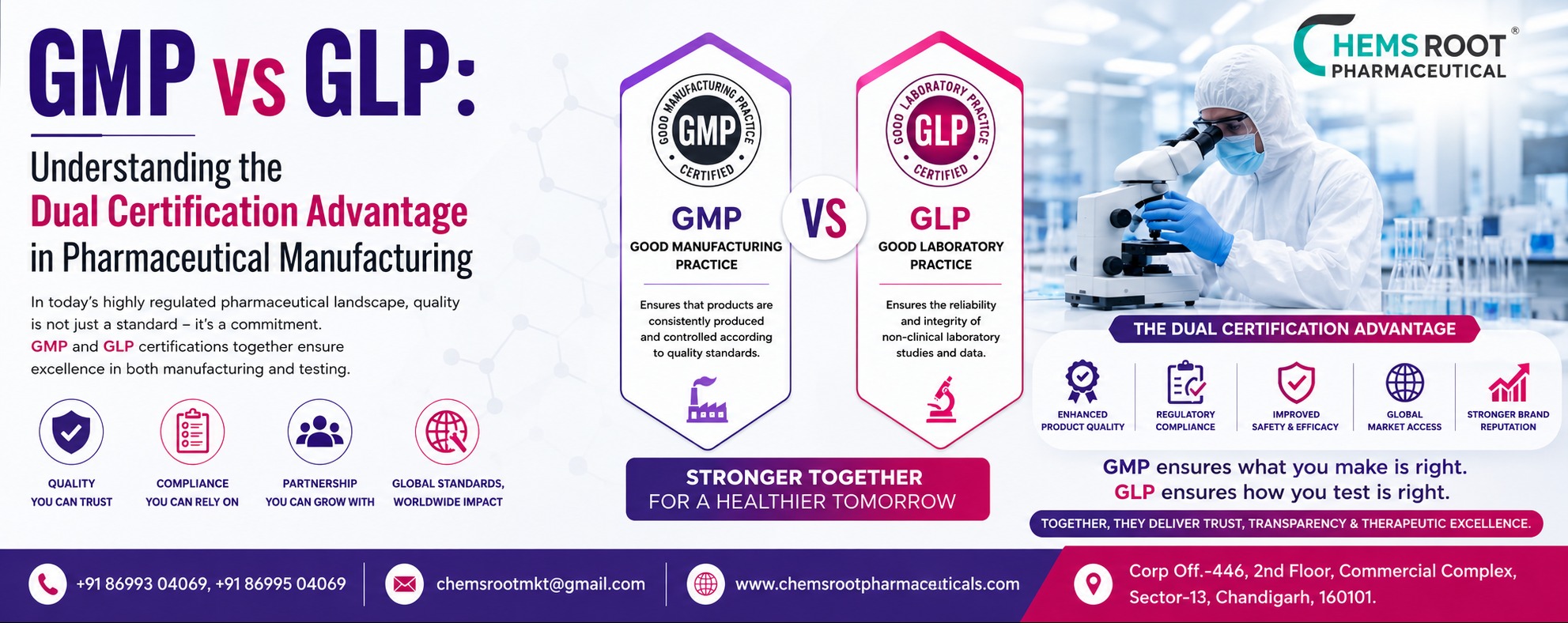
GMP is concerned with the complete manufacturing process. It ensures that medicines are produced, packaged, and stored under controlled conditions so that every batch maintains consistent quality and safety.
GLP, on the other hand, focuses on laboratory activities. It ensures that testing procedures are properly documented, laboratory equipment is calibrated, samples are handled correctly, and analytical results are accurate and dependable.
In simple terms, GMP helps ensure medicines are manufactured correctly, while GLP helps ensure they are tested correctly. Together, they create a strong quality framework that supports reliable pharmaceutical production.
Why Dual Compliance Matters
When a pharmaceutical manufacturer follows both GMP and GLP principles, it demonstrates a commitment to quality across production and laboratory operations.
Some advantages include:
- Better batch consistency
- Improved product reliability
- Stronger quality documentation
- Enhanced traceability
- Accurate analytical results
- Greater confidence during audits
- Improved regulatory readiness
For pharmaceutical businesses, this combination helps reduce quality-related risks throughout the manufacturing process.
How Dual Quality Systems Benefit Pharmaceutical Businesses
Distributors and pharmaceutical marketers often depend on manufacturing partners to maintain product quality throughout the supply chain.
Choosing a manufacturer with robust manufacturing and laboratory systems can provide several business benefits.
Consistent Product Performance
Validated manufacturing and testing procedures help maintain product consistency across production batches.
Simplified Regulatory Documentation
Well-maintained documentation supports product registration, audits, and regulatory submissions.
Better Supply Chain Confidence
Reliable manufacturing processes reduce production delays caused by quality issues or batch failures.
Long-Term Business Relationships
Healthcare professionals and institutional buyers often prefer suppliers with dependable quality systems, making manufacturing standards an important factor in building long-term partnerships.
Questions to Ask Before Selecting a Manufacturer
Rather than relying only on promotional claims, businesses should evaluate a manufacturer's quality infrastructure.
Useful questions include:
- Does the manufacturing facility operate according to GMP guidelines?
- How are laboratory testing procedures documented?
- What quality assurance systems are followed during production?
- Are raw materials tested before manufacturing begins?
- How are finished products evaluated before dispatch?
- What documentation is provided with each production batch?
The answers help assess whether the manufacturer has established quality systems throughout its operations.
Chandigarh's Role in Pharmaceutical Manufacturing
Chandigarh continues to serve as an important pharmaceutical business destination for companies operating across North India. Its strategic location provides convenient access to Punjab, Haryana, Himachal Pradesh, Delhi, and neighboring markets.
Pharmaceutical distributors, stockists, healthcare organizations, and entrepreneurs often work with manufacturers in this region because of efficient logistics, skilled workforce availability, and proximity to established pharmaceutical clusters.
Choosing a Manufacturer Beyond Certifications
While GMP and GLP are important quality indicators, selecting a manufacturing partner should involve a broader evaluation. Businesses should also review production capacity, formulation expertise, quality assurance practices, regulatory documentation, delivery reliability, and technical support.
Companies such as Chemsroot Pharmaceutical work with pharmaceutical businesses seeking manufacturing solutions supported by structured quality systems and regulatory compliance. Assessing both manufacturing standards and laboratory capabilities before entering into a partnership helps create a stronger foundation for long-term business growth.
Understanding the complementary roles of GMP and GLP allows pharmaceutical companies to make better-informed decisions, reduce operational risks, and build partnerships that support consistent product quality in an increasingly competitive healthcare market.