
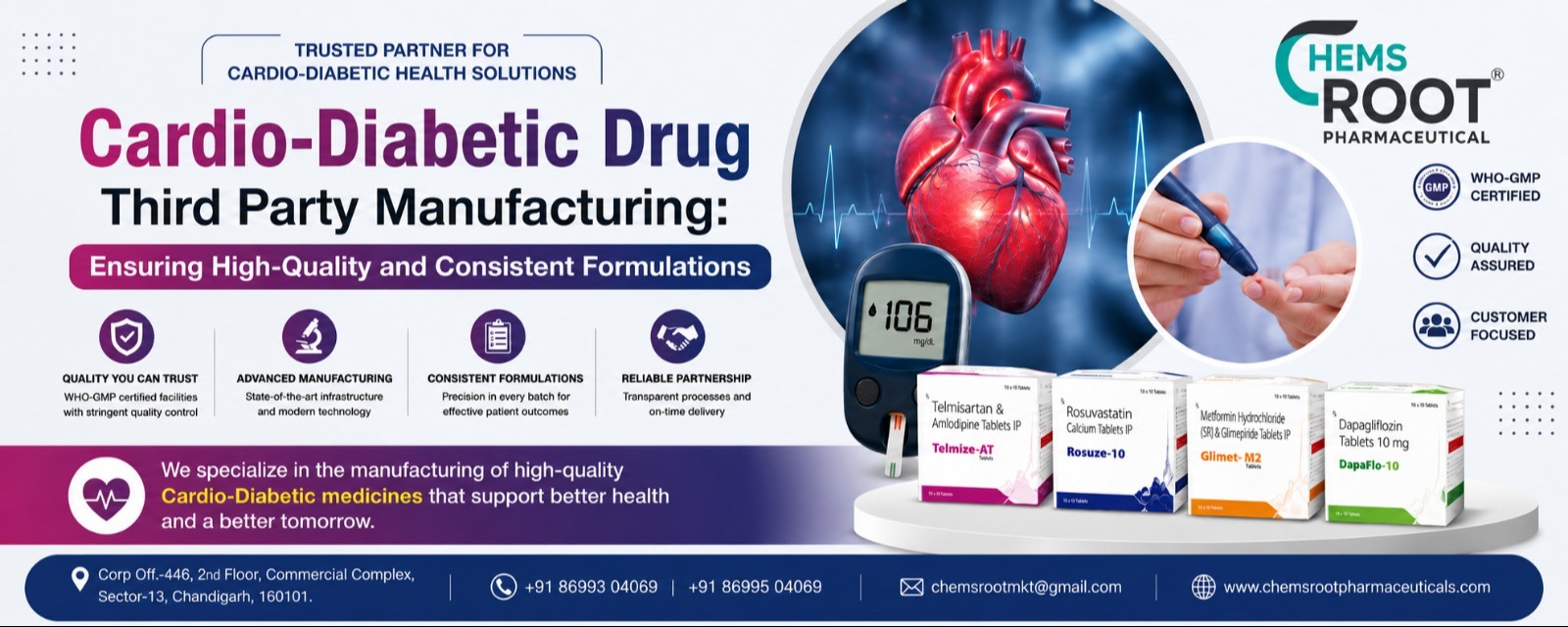
Cardiovascular diseases and diabetes are among the most common chronic health conditions worldwide, creating a growing demand for high-quality pharmaceutical products. As pharmaceutical companies continue to expand their product portfolios, many rely on cardio-diabetic drug third party manufacturing to produce medicines efficiently while maintaining strict quality standards. Selecting the right manufacturing partner is essential for ensuring product consistency, regulatory compliance, and long-term business success.
A dependable manufacturer not only provides production capabilities but also supports formulation development, quality assurance, and documentation that help pharmaceutical businesses compete in a highly regulated market.
Understanding Cardio-Diabetic Pharmaceutical Manufacturing
Cardio-diabetic medicines include formulations used to support the management of cardiovascular and metabolic conditions. These products often require precise manufacturing processes because patients may use them for extended periods under medical supervision.
Common product categories include:
- Anti-diabetic tablets
- Anti-hypertensive medicines
- Cholesterol-lowering drugs
- Antiplatelet medications
- Combination therapy formulations
- Sustained release tablets
- Nutraceuticals for metabolic health
Producing these medicines requires careful formulation, validated manufacturing processes, and rigorous quality testing to maintain consistency across every batch.
Why Quality Is Critical in Chronic Care Medicines
Medicines used for long-term health conditions must maintain consistent quality throughout their shelf life. Even minor variations in manufacturing can affect product performance, making quality assurance one of the most important aspects of pharmaceutical production.
A reliable manufacturer focuses on:
- Qualified raw material sourcing
- Standardized production procedures
- Process validation
- Batch-to-batch consistency
- Stability testing
- Comprehensive documentation
These practices help ensure that products meet established pharmaceutical standards before reaching distributors and healthcare providers.
The Role of Formulation Development
Effective pharmaceutical manufacturing begins with well-designed formulations. Manufacturers invest in research and development to optimize factors such as ingredient compatibility, dosage accuracy, dissolution characteristics, and product stability.
Carefully developed formulations help achieve consistent product performance while supporting regulatory requirements and long-term product reliability.
What to Look for in a Third Party Manufacturing Partner
Before choosing a manufacturing company, pharmaceutical businesses should evaluate several important capabilities.
GMP-Compliant Manufacturing
Facilities operating under Good Manufacturing Practices (GMP) follow structured production systems that help ensure product quality and consistency.
Advanced Manufacturing Infrastructure
Modern production equipment, automated systems, and controlled manufacturing environments contribute to efficient and reliable pharmaceutical manufacturing.
Strong Quality Assurance Systems
Quality assurance should extend throughout the manufacturing process rather than focusing only on finished products.
Regulatory Documentation
Complete manufacturing records, certificates of analysis, and stability data support regulatory compliance and product registration.
Product Development Support
Manufacturers with formulation expertise can assist businesses in expanding their cardio-diabetic product portfolio over time.
Benefits of Third Party Manufacturing
Outsourcing pharmaceutical production offers several operational advantages.
These include:
- Lower infrastructure investment
- Faster product development
- Access to experienced manufacturing professionals
- Flexible production capacity
- Modern manufacturing technology
- Better operational efficiency
This approach allows pharmaceutical companies to focus on branding, marketing, and distribution while manufacturing is handled by specialists.
Questions to Ask Before Finalizing a Manufacturing Partner
A thorough evaluation helps businesses identify manufacturers capable of supporting long-term growth.
Useful questions include:
- Does the facility comply with GMP requirements?
- What therapeutic categories does the company specialize in?
- How are quality assurance procedures implemented?
- Is formulation development available?
- What documentation accompanies each production batch?
- Can manufacturing capacity increase as business demand grows?
These questions provide valuable insight into the manufacturer's technical capabilities and commitment to quality.
Chandigarh's Growing Pharmaceutical Manufacturing Ecosystem
Chandigarh has become an important pharmaceutical hub serving businesses across Punjab, Haryana, Himachal Pradesh, and other parts of North India. Its strategic location, established pharmaceutical infrastructure, and strong transportation network make it an attractive destination for pharmaceutical distributors, marketers, and healthcare organizations seeking dependable manufacturing partners.
Working with a manufacturer in this region can simplify logistics while supporting efficient supply chain management.
Building a Reliable Long-Term Partnership
Choosing a cardio-diabetic third party manufacturing partner involves evaluating far more than production capacity. Quality systems, formulation expertise, regulatory compliance, technical support, and consistent manufacturing practices all contribute to successful long-term collaboration.
Companies such as Chemsroot Pharmaceutical provide third party manufacturing solutions across multiple therapeutic segments, including cardio-diabetic formulations. By partnering with a manufacturer that emphasizes quality assurance, validated production processes, and regulatory compliance, pharmaceutical businesses can strengthen their product portfolio while meeting the evolving needs of healthcare providers and patients.
A carefully selected manufacturing partner supports consistent product quality, dependable supply, and sustainable business growth in today's competitive pharmaceutical industry.